
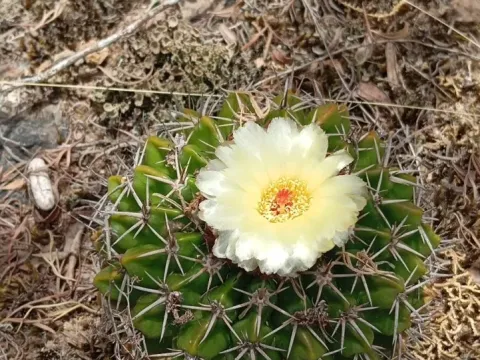
Parodia
Parodia
Propagation of Parodia in agricultural conditions is most often carried out by seeds. Sowing is carried out in the spring period, when the air temperature remains stable above 20-22 degrees Celsius.
What the section contains
 Parodia alacriportana
Parodia alacriportana
Parodia alacriportana
 Parodia aureicentra
Parodia aureicentra
Parodia aureicentra
 Parodia ayopayana
Parodia ayopayana
Parodia ayopayana
 Parodia chrysacanthion
Parodia chrysacanthion
Parodia chrysacanthion
 Parodia claviceps
Parodia claviceps
Parodia claviceps
 Parodia columnaris
Parodia columnaris
Parodia columnaris
 Parodia commutans
Parodia commutans
Parodia commutans
 Parodia crassigibba
Parodia crassigibba
Parodia crassigibba
 Parodia erinaceus
Parodia erinaceus
Parodia erinaceus
 Parodia lenninghausii
Parodia lenninghausii
Parodia lenninghausii
 Parodia maassii
Parodia maassii
Parodia maassii
 Parodia magnifica
Parodia magnifica
Parodia magnifica
 Parodia mairanana
Parodia mairanana
Parodia mairanana
 Parodia microsperma
Parodia microsperma
Parodia microsperma
 Parodia muricata
Parodia muricata
Parodia muricata
 Parodia procera
Parodia procera
Parodia procera
 Parodia ritteri
Parodia ritteri
Parodia ritteri
 Parodia schumanniana
Parodia schumanniana
Parodia schumanniana
 Parodia subterranea
Parodia subterranea
Parodia subterranea
 Parodia warasii
Parodia warasii
Parodia warasii
 Snowball cactus
Parodia nivosa
Snowball cactus
Parodia nivosa
Parodia
The seeds of this cactus are extremely small, so they are not covered with a thick layer of soil. It is enough to press them slightly into a moistened substrate consisting of a mixture of sand and turf soil.
For seed germination, it is extremely important to maintain constant humidity and high air temperature. It is recommended to use mini-greenhouses with a transparent cover to create a greenhouse effect.
After the first shoots appear, it is extremely important to provide them with full lighting, while avoiding direct sunlight. Ventilation of the containers begins gradually so that the young plants adapt to the dry air.
Pricking of seedlings is carried out no earlier than a few months after germination, when the cacti reach the size of a small pea. At this stage, it is important to be careful not to damage the delicate root system.
Parodia belongs to the Cactaceae family and grows in the wild in the mountainous regions of South America, mainly in Argentina, Paraguay, and Uruguay. In their natural environment, they are adapted to rocky soils and temperature fluctuations.
For successful cultivation, a substrate with excellent drainage properties is required. The soil mixture should have a slightly acidic reaction, which contributes to the full absorption of nutrients from the soil.
The plants require intense but diffused sunlight. Direct rays in the afternoon can cause burns to the epidermis, so shading is often used in home and greenhouse conditions.
Watering should be moderate during the growing season and practically absent in winter. Stagnation of moisture in the tray or waterlogging of the substrate is destructive to the root system, which often leads to rotting.
The temperature regime in the summer period should correspond to the interval of 20-25 degrees. In winter, the plants need a rest period at cool temperatures, which is a necessary condition for successful flowering in the next season.
The main pests for representatives of this genus are the spider mite and the mealybug. These insects feed on the cellular juice of the cactus, leaving behind characteristic dry spots and spider webs.
To control pests, specialized systemic acaricides and insecticides are used. It is important to carry out regular inspection of plants, especially in the folds of the ribs, where pests most often hide.
Fungal diseases, such as rot, occur when the rules of agricultural technology are violated. Excessive watering combined with poor air ventilation creates ideal conditions for the development of pathogenic microorganisms.
Physiological damage is often associated with an incorrect lighting regime. The epidermis of the cactus can change color to reddish or yellowish in too bright sun or, conversely, stretch out when there is a lack of light.
- Maintaining quarantine for new specimens
- Regular cleaning of tools
- Ensuring good air circulation in the room