
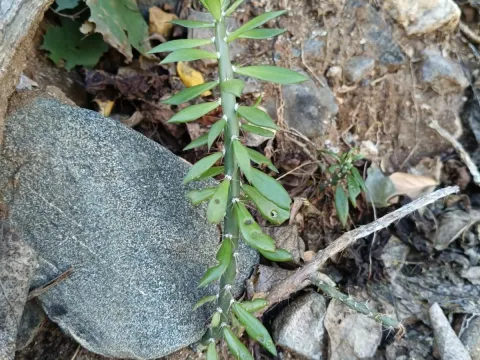
Pereskiopsis
Pereskiopsis Britton & Rose
Pereskiopsis is typically propagated vegetatively, which is highly efficient due to its rapid growth rate. Stem cuttings are the preferred method, taken during the active growing season in spring and summer.
What the section contains

Pereskiopsis
To prepare cuttings, select healthy stems and cut them into segments of 8 to 12 centimeters. The cut ends must be left to callous for at least 24 to 48 hours to prevent potential fungal infection.
Place the calloused cuttings into a well-draining, sterile rooting medium. Maintaining a high humidity environment and warm bottom heat significantly accelerates root formation.
Once roots are established, the young plants should be moved to individual pots. Transition them gradually to higher light levels to ensure the stems remain sturdy rather than elongated.
Consistency is key during the propagation phase. Providing stable temperatures and avoiding waterlogging will result in uniform batches of high-quality grafting stocks.
As a member of the Cactaceae family, Pereskiopsis is unique for its leafy appearance. It originates from tropical and subtropical regions, necessitating warm and humid conditions for optimal growth.
High light intensity is crucial. In professional greenhouse settings, Pereskiopsis is often cultivated under full sun or supplemental LED lighting to maximize its metabolic rate and stem diameter.
The substrate should be rich in organic matter but porous enough to prevent root rot. A mix of peat, loam, and coarse grit is ideal for ensuring proper nutrient uptake and aeration.
Unlike many arid-adapted cacti, Pereskiopsis requires frequent watering during its growing phase. The soil should be kept consistently moist to maintain turgor pressure in the leaves and stems.
During the winter dormancy period, watering must be significantly reduced and temperatures lowered to around 15 degrees Celsius to allow the plant a necessary resting phase.
Spider mites are the most persistent pest for Pereskiopsis, especially in environments with low airflow. They thrive in dry conditions and can quickly colonize the undersides of the leaves.
Mealybugs are also common, clustering in the axils of the leaves. Regular inspections and the use of systemic insecticides are necessary to keep the plants free from infestation.
Fungal diseases related to overwatering or poor ventilation can affect the stem base. Ensuring that the surface of the soil dries slightly between waterings helps prevent these issues.
Nutrient deficiencies, specifically magnesium or iron, can cause yellowing of the foliage. Balanced fertilization with micro-elements is recommended to sustain vigorous growth throughout the season.
By maintaining a clean environment and implementing a preventive pest management program, growers can ensure that their Pereskiopsis remains healthy and productive as a grafting stock.