
Parodia magnifica
Parodia magnifica
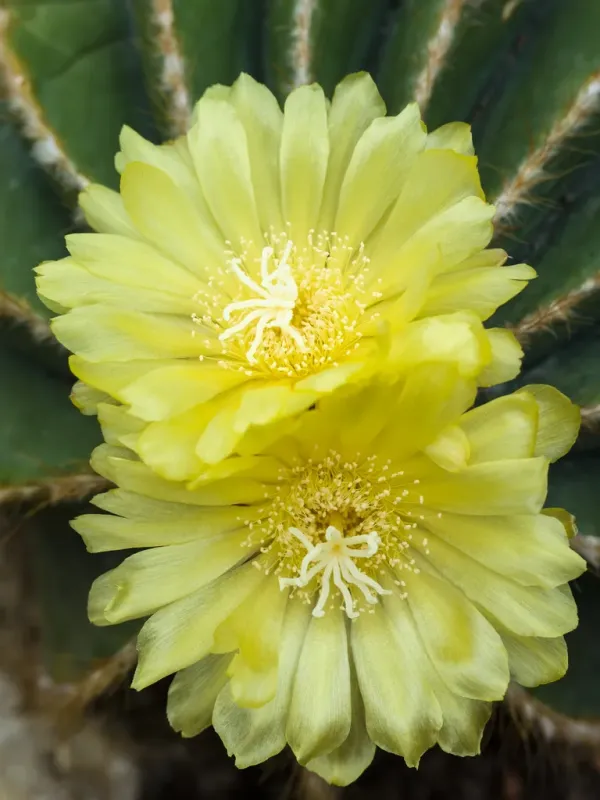
Description
Growing requirements
Parodia magnifica is an ornamental succulent belonging to the Cactaceae family. Native to the mountainous regions of southern Brazil, this species is highly valued for its striking, globe-shaped stems and vibrant, golden-yellow spines that line its distinct ribs.
The plant thrives in well-lit environments, requiring several hours of direct sunlight to maintain its compact, spherical form. Without adequate light, the plant will become etiolated and lose its architectural appeal, becoming stretched and fragile.
Growing conditions demand a highly porous, gritty substrate that ensures rapid drainage. A mix consisting of mineral components, such as pumice or coarse sand, combined with a small amount of organic potting soil is ideal for preventing water retention.
Temperature requirements vary by season; during the active growth period, it prefers temperatures between 20 and 30 degrees Celsius. In contrast, the winter dormant period requires a cooler climate, ideally between 10 and 15 degrees, to simulate its natural habitat.
Watering should be executed with caution, allowing the substrate to dry out completely between sessions. During the winter rest, irrigation should be kept to an absolute minimum or suspended entirely to avoid freezing of the roots in damp soil.
Main diseases and pests
Root rot is the most significant threat to Parodia magnifica, primarily caused by overwatering or soil that is too dense. This condition compromises the root system, eventually leading to the softening and decay of the plant's main stem.
Spider mites are a common pest in indoor environments, especially where air circulation is low. These tiny arachnids feed on the plant's sap, leaving tiny white spots and webbing that can permanently mar the aesthetic appearance of the cactus.
Mealybugs are another frequent issue, often hiding in the dense spine clusters where they are difficult to detect early. They produce a white, waxy substance that acts as a protective shield against contact treatments, necessitating systemic insecticides.
Scale insects can also infest the epidermis, creating hard, brown bumps and depleting the plant's resources. They are typically removed manually with a soft brush dipped in alcohol, followed by a thorough application of appropriate horticultural oil.
Preventive measures include maintaining good hygiene around the plant, ensuring adequate ventilation, and performing regular inspections. Early detection of pests and pathogens is the key to maintaining a healthy and thriving Parodia collection.