
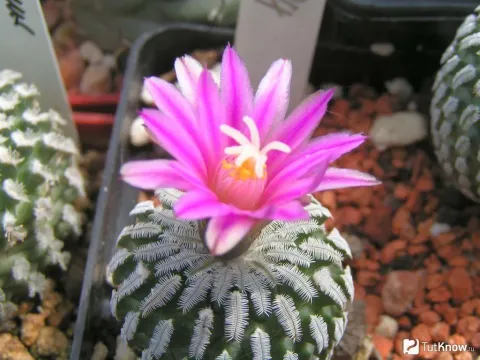
Pelecyphora
Pelecyphora
Pelecyphora is a genus of slow-growing cacti belonging to the Cactaceae family. In their natural habitat, they are found exclusively in the arid regions of Mexico, primarily in the states of San Luis Potosi and Tamaulipas. These plants are well-adapted to the extreme conditions of high-altitude deserts, surviving through a developed root system and water-storing stems.
What the section contains
 Escobaria missouriensis
Pelecyphora missouriensis
Escobaria missouriensis
Pelecyphora missouriensis
 Escobaria vivipara
Pelecyphora vivipara
Pelecyphora abdita
Pelecyphora abdita
Escobaria vivipara
Pelecyphora vivipara
Pelecyphora abdita
Pelecyphora abdita
 Pelecyphora aselliformis
Pelecyphora aselliformis
Pelecyphora aselliformis
 Pelecyphora dasyacantha
Pelecyphora dasyacantha
Pelecyphora dasyacantha
 Pelecyphora emskoetteriana
Pelecyphora emskoetteriana
Pelecyphora emskoetteriana
 Pelecyphora laredoi
Pelecyphora laredoi
Pelecyphora laredoi
 Pelecyphora minima
Pelecyphora minima
Pelecyphora minima
 Pelecyphora sneedii
Pelecyphora sneedii
Pelecyphora sneedii
 Pelecyphora strobiliformis
Pelecyphora strobiliformis
Pelecyphora strobiliformis
Pelecyphora
Botanically, this culture is distinguished by the unique shape of its areoles, located on expanded tubercles, which gives the plant a distinct appearance resembling a crest or an axe. The stem is typically solitary, ranging from flattened-globose to cylindrical, making it a prized specimen for specialized plant collections rather than commercial agriculture.
Successful cultivation requires specific substrates consisting of mineral components, such as gravel, coarse sand, crushed brick, and a small amount of turf soil. The growing medium must have excellent drainage, as moisture stagnation near the root collar is often fatal to these sensitive succulent species.
The plant is highly demanding in terms of light exposure and requires direct sunlight to maintain its natural growth pattern and the density of its specialized spines. During the active growing season, moderate but regular watering is essential, followed by a complete cessation of water during the winter dormancy period, where temperatures should be kept between 8 and 12 degrees Celsius.
Economic and hobbyist use of Pelecyphora is primarily limited to decorative horticulture and botanical research. Because of its slow growth rate, the plant is sometimes used as grafting stock for more vigorous cactus species or grown as a focal point in professional greenhouse collections.
The primary threats to Pelecyphora include root and stem rots, which typically result from poor watering management and the use of non-sterile or excessively heavy soil mixtures. To prevent fungal infections, it is vital to ensure adequate air circulation within the growing space or greenhouse environment.
Among pests, the mealybug poses the most significant threat, as it often hides deep within the tubercles, making early detection challenging. The plant may also be susceptible to spider mites, especially in conditions characterized by low humidity and high ambient temperatures.
Managing these pests requires the application of systemic insecticides and acaricides, which must be used with caution to avoid chemical damage to the epidermis of the stem. Consistent monitoring and inspection of the plants allow for the early identification of infestations and prevent further spread.
Disease prevention strategies include strict adherence to climate controls, avoidance of over-watering, and the thorough sterilization of potting soil prior to planting. Should rot occur, immediate repotting with the removal of damaged root tissue followed by fungicide application is the recommended course of action.
With proper agronomic care, Pelecyphora can thrive for decades, maintaining resistance to adverse environmental factors. The key to the plant's longevity is the imitation of its native Mexican plateau conditions, characterized by significant diurnal temperature fluctuations and pronounced periods of drought.