
Parodia warasii
Parodia warasii
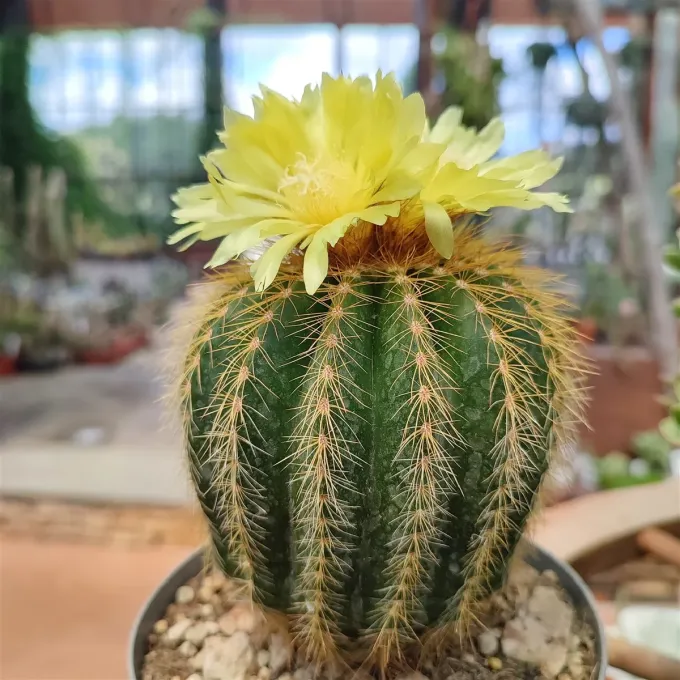
Description
Growing requirements
Parodia warasii is a distinctive member of the Cactaceae family, native to the mountainous terrain of southern Brazil. This succulent is widely cultivated for its ornamental value, characterized by a cylindrical stem and vibrant, needle-like spines arranged in dense areoles.
The botanical structure of this species includes pronounced ribs that provide structural integrity to the plant as it matures. Under optimal conditions, the plant displays a striking golden-yellow hue, which is its most recognizable feature in botanical collections.
Effective cultivation requires a bright, well-lit environment. While the plant appreciates significant sunlight, it is recommended to provide protection from intense afternoon heat to prevent epidermis scorching. A minimum temperature of 10-12°C should be maintained during the winter dormancy period.
The substrate must be highly porous and inorganic-heavy to ensure rapid drainage. A standard succulent potting mix amended with coarse sand, pumice, or perlite is essential to simulate the plant's natural rocky habitat and prevent waterlogging around the root system.
Agrotechnical maintenance focuses on a controlled watering regimen. During the active growth season, water should be applied only when the soil has completely dried out. In the winter months, the plant requires a dry environment to successfully enter its resting phase.
Main diseases and pests
The most significant threat to the health of this species is root and stem rot caused by fungal pathogens in overly damp soil. Improving ventilation around the base of the cactus and ensuring the substrate dries quickly after irrigation are primary preventive measures.
Pest management involves regular inspections for spider mites and mealybugs. Due to the density of the spines, these pests can be difficult to detect in early stages, so the use of systemic insecticides is recommended if an infestation is observed on the cactus body.