
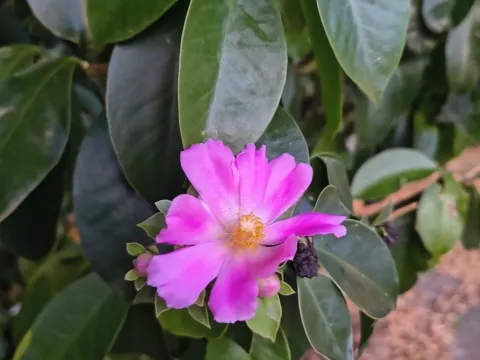
Pereskia
Pereskia
Propagation of Pereskia is most effectively achieved through stem cuttings during the active growing season, typically in late spring or early summer.
What the section contains


Pereskia
Cuttings should be 10–15 cm long and allowed to callous for 24 hours before being inserted into a well-draining substrate like a mix of peat and perlite.
Seeds can be sown in sterile soil at temperatures around +22...+25°C, requiring constant high humidity until germination occurs.
New plants develop quickly once established, requiring repotting into nutrient-rich soil to support their fast vertical growth habits.
Commercial growers utilize greenhouses with artificial lighting to ensure consistent growth rates and healthy development throughout the year.
Pereskia belongs to the Cactaceae family but is distinct due to its broad, succulent leaves, representing a primitive evolutionary stage of cacti.
This tropical plant requires warm environments and must be protected from frost, as even mild sub-zero temperatures can cause tissue damage.
Soil requirements include excellent drainage and a slightly acidic to neutral pH level; a mix of loam, sand, and organic compost is generally ideal.
The plant thrives in bright, filtered sunlight; while it tolerates higher light levels, afternoon shade is recommended to prevent leaf scorching.
Consistent watering is essential, allowing the soil to dry slightly between sessions; however, waterlogging should be strictly avoided.
Pereskia is highly valued in horticulture as a reliable rootstock for grafting other, more delicate cacti species, promoting faster growth and vigor.
Several species, such as Pereskia aculeata, are cultivated for their edible fruits which are rich in vitamins, minerals, and proteins.
The leaves are harvested for culinary purposes in many tropical regions, serving as a nutritious leafy green vegetable with high protein content.
Productivity is maximized through balanced fertilization, ensuring adequate potassium and phosphorus levels for fruit development.
With proper greenhouse management, Pereskia can provide multiple harvests of foliage and fruits throughout the year.
Common pests affecting Pereskia include spider mites and mealybugs, which tend to infest the undersides of the leaves and stems.
Root rot and various fungal pathogens are the primary threats, usually resulting from poor air circulation or overwatering in humid conditions.
Effective pest management involves the use of systemic insecticides, while fungal issues are addressed through improved airflow and targeted fungicides.
Routine inspection of the foliage is necessary to detect early signs of infestation and prevent rapid spread across the plant population.
Maintaining a clean growing environment is crucial to minimize the buildup of debris and pathogens that could compromise plant health.
Fruit harvesting is performed manually when the fruit reaches its characteristic mature color and displays a slight softening of the skin.
Foliage harvesting involves trimming side branches or outer leaves, which encourages the plant to become bushier and more productive over time.
Harvested products should be kept in a cool, ventilated area and consumed or processed promptly to maintain peak freshness and quality.
Protective clothing, including thick gloves, is mandatory during harvest due to the presence of sharp spines along the branches and leaf nodes.
Post-harvest handling focuses on preventing bruising and dehydration, which are common issues given the delicate nature of the ripe fruits.