
Oreocereus
Oreocereus
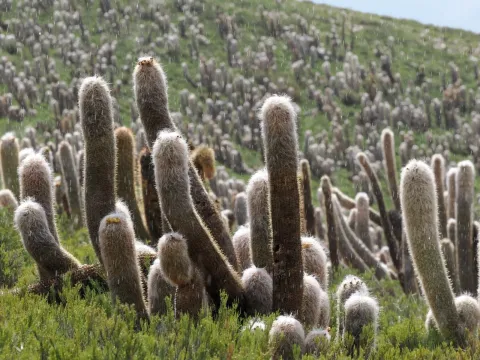
Oreocereus is a genus of perennial succulents belonging to the Cactaceae family. These plants are native to the high-altitude regions of the Andes, spanning Peru, Bolivia, Chile, and Argentina.
What the section contains
 Oreocereus celsianus
Oreocereus celsianus
Oreocereus celsianus
 Oreocereus doelzianus
Oreocereus doelzianus
Oreocereus doelzianus
 Oreocereus hempelianus
Oreocereus hempelianus
Oreocereus hempelianus
 Oreocereus leucotrichus
Oreocereus leucotrichus
Oreocereus leucotrichus
 Oreocereus pseudofossulatus
Oreocereus ritteri
Oreocereus ritteri
Oreocereus pseudofossulatus
Oreocereus pseudofossulatus
Oreocereus ritteri
Oreocereus ritteri
 Oreocereus trollii
Oreocereus trollii
Oreocereus trollii
Oreocereus
The botanical feature of the genus is its dense coating of hair or spines, which acts as a protective shield against high UV exposure and extreme thermal fluctuations inherent in mountain climates.
Cultivation requires a well-draining, mineral-heavy soil mix. Proper aeration of the substrate is critical to prevent root damage, which is a common cause of failure in domestic conditions.
Sunlight exposure is essential for the healthy development of Oreocereus. They thrive in locations with bright, direct light, making them suitable for greenhouse cultivation or sun-exposed windows.
The watering regime must follow the drying-out cycle. During the growing season, water moderately once the soil has completely dried; during the winter dormancy period, withhold water almost entirely.
The most significant threats to Oreocereus are fungal pathogens caused by improper watering techniques and high humidity levels without sufficient ventilation.
Root rot is the primary physiological disorder. It often stems from waterlogged soil or low temperatures combined with excess humidity, leading to the rapid decline of the cactus base.
Mealybugs are the most persistent pests. Because the plant is covered in dense hair, these insects often colonize the stem surface, hiding from direct observation and mechanical control.
Spider mites are another common issue, especially in dry, warm environments. They pierce the epidermis to feed on plant sap, leaving behind unsightly yellowing and scarred tissues.
Preventive care involves regular inspection of the gaps between the ribs of the stem and the use of systemic pesticides if an infestation is confirmed early in the cycle.