
Bratonia
x Bratonia Moir
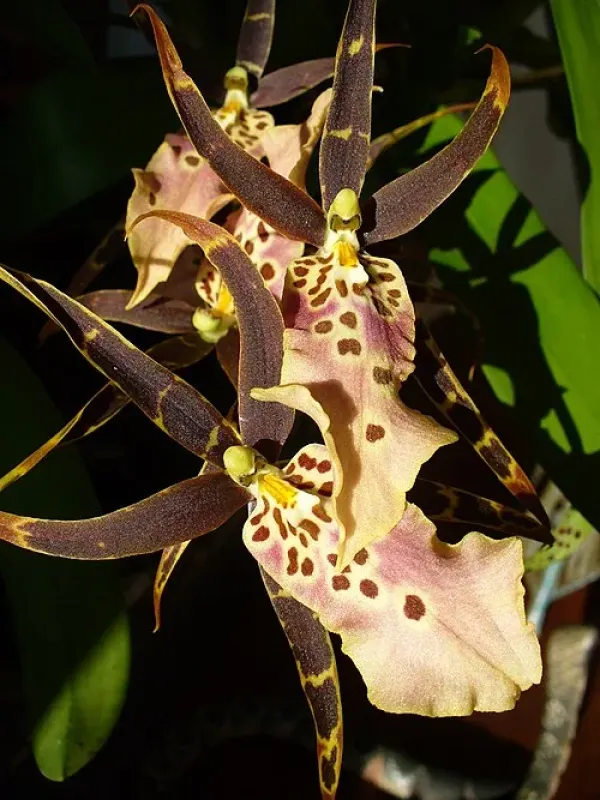
Description
Growing requirements
Bratonia (x Bratonia) is a sophisticated intergeneric hybrid resulting from the crossbreeding of Brassia and Miltonia. As a member of the Orchidaceae family, it combines the structural elegance of its parent genera with specific requirements for indoor cultivation.
The plant thrives in bright, indirect light. Placing it near an east- or west-facing window is ideal, as direct midday sun can easily scorch the foliage. Consistent lighting is crucial for the metabolic processes that support successful blooming.
The substrate must be highly porous and well-draining. Orchid bark chips, often mixed with horticultural charcoal, perlite, and a small amount of sphagnum moss, provide the necessary aeration and moisture retention that this species requires.
Temperature management should mimic the tropical conditions of its origins, with a day range of 20°C to 25°C. A slight cooling at night is beneficial as it simulates natural environmental fluctuations and helps trigger flower spike development.
High relative humidity, ideally between 60% and 70%, is essential for this orchid. In home environments, using humidity trays or ultrasonic humidifiers is highly recommended to prevent the leaf tips from turning brown and drying out.
Main diseases and pests
Scale insects and spider mites are the most common pests affecting Bratonia. These pests often go unnoticed until significant damage, such as yellowing spots or stunted growth, becomes apparent, requiring immediate intervention with suitable pesticides.
Root rot caused by stagnant moisture is a primary threat. If the orchid is left sitting in water or the potting mix breaks down into fine debris, the roots will quickly deteriorate, leading to a rapid decline of the entire plant.
Fungal infections can appear as black or brown spots on the pseudobulbs and leaves, often caused by inadequate airflow. Improving ventilation and isolating the affected plants are standard preventive measures in professional greenhouse management.
To combat these threats, a proactive approach is required. This includes maintaining sterile equipment, conducting routine visual inspections of the root system, and adjusting irrigation schedules based on ambient temperature and seasonal light changes.
Using systemic insecticides or fungicides should be done with caution, following the manufacturer's guidelines. It is vital to ensure that the environment is sufficiently ventilated after any chemical treatment to promote recovery.