
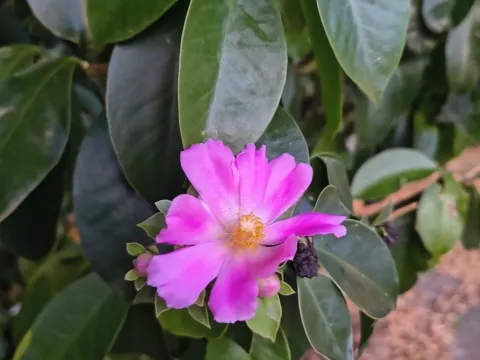
Pereskia
Pereskia Mill.
Pereskia (genus Pereskia Mill.) is a unique group of plants within the cactus family (Cactaceae). Unlike most cacti, members of this genus possess well-developed, persistent leaves and woody stems, representing a primitive evolutionary stage in the family.
What the section contains

Pereskia
Originating from the tropical regions of Central and South America, these plants thrive in warm, frost-free environments. They require significant solar exposure and consistent warmth to maintain their physiological processes and growth cycles.
The ideal soil medium for Pereskia is a well-draining, nutrient-rich, and slightly acidic substrate. Preventing waterlogging is crucial, as the root systems are susceptible to fungal rot if exposed to standing water for extended periods.
Cultivation requires steady ambient temperatures. While they are resilient, they do not tolerate freezing conditions. During the growing season, they require regular watering, while in the dormant period, moisture levels should be significantly reduced.
Proper agricultural practice involves providing structural support for climbing species like Pereskia aculeata. Pruning is often necessary to control the size and shape of the bush and to promote more vigorous growth during the spring season.
Pereskia is economically significant in several regions. Species such as Pereskia aculeata (Barbados gooseberry) are cultivated for their edible berries, which have a pleasant flavor and high nutritional content.
The leaves of certain Pereskia species are consumed as a leafy green vegetable. They are notably rich in proteins and essential micronutrients, making them a valuable food source in many tropical agricultural systems.
In ornamental horticulture, these plants are prized for their showy, fragrant flowers that bloom in clusters. They are often used in landscaping to provide dense, flowering hedges in warmer climates.
Pereskia is widely utilized in the horticultural industry as a grafting stock. Its rapid growth rate and hardy root system make it an excellent choice for propagating delicate or slow-growing cactus species.
Yields of fruit can be substantial under favorable conditions. Consistent pruning and balanced fertilization are key factors in maximizing the berry production of established plants throughout the harvest season.
The most common pests affecting Pereskia include spider mites and mealybugs. These organisms thrive in dry environments and can quickly infest the leaf axils, sucking sap and causing the leaves to yellow or drop.
Effective control measures include the application of horticultural oils or systemic insecticides. Regular inspection of the undersides of the leaves is recommended to detect infestations before they reach critical levels.
Root rot is the primary disease risk. It is almost exclusively caused by overwatering or poor drainage. Infected plants must be repotted into fresh, sterile soil, with all decayed roots carefully trimmed away.
Fungal leaf spots can occur in environments with high humidity and stagnant air. Improving ventilation and spacing between plants can significantly reduce the risk of these infections during the rainy season.
Physical hazards include sharp thorns located at the leaf axils. When performing maintenance tasks, it is advised to use heavy-duty gardening gloves to avoid skin punctures and irritation caused by the plant's natural defenses.