
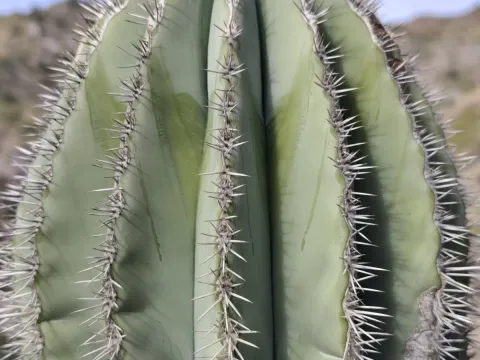
Pachycereus
Pachycereus
Pachycereus propagation is typically performed through seeds sown in spring, ensuring the substrate remains warm and consistently moist but not saturated.
What the section contains


Pachycereus
The seeds should be placed in a mineral-rich, porous medium and kept at temperatures around 25°C to facilitate uniform germination and early growth.
Cuttings are another viable method, requiring a clean, angled cut followed by several days of air-drying to form a protective callous before planting.
Seedlings require protection from intense direct sunlight during their first months of life to prevent bleaching and dehydration of the soft tissue.
As the young plants grow, they must be gradually acclimated to full outdoor light conditions to ensure the development of strong, characteristic spines.
Pachycereus belongs to the Cactaceae family, encompassing massive, column-shaped species native to arid regions of Mexico and the Southwestern United States.
These plants thrive in coarse, well-drained soil mixtures that prevent moisture retention, mimicking the rocky, sandy habitats of their natural range.
Sunlight is the most critical environmental factor; these cacti require maximum exposure to sustain their structural integrity and vigorous development.
Temperature management is crucial: while they tolerate heat, they require a distinct cool-dry dormant period during winter to support future flowering.
Proper airflow is essential in any cultivation environment to reduce the incidence of physiological disorders and to maintain the health of the waxy cuticle.
Root rot, often caused by Phytophthora or other soil-borne fungi, remains the most lethal threat to Pachycereus when cultivation conditions are too humid.
Mealybugs and scale insects represent the most significant pest threats, as they can quickly hide between the deep ribs of the cactus stem.
Spider mites are frequently encountered during hot, dry spells, causing significant epidermal damage that is often irreversible and unsightly.
Effective management strategies combine chemical controls with cultural practices like proper sanitation and limiting humidity around the base of the plant.
Regular monitoring of the stem surfaces and root health helps identify early signs of stress, allowing for targeted intervention before infections spread.