
Parodia mairanana
Parodia mairanana
Description
Growing requirements
Parodia mairanana is a distinguished member of the Cactaceae family, native to the rugged terrains of Bolivia. It thrives in high-altitude rocky environments, where it has evolved to withstand intense sunlight and extreme fluctuations in day and night temperatures.
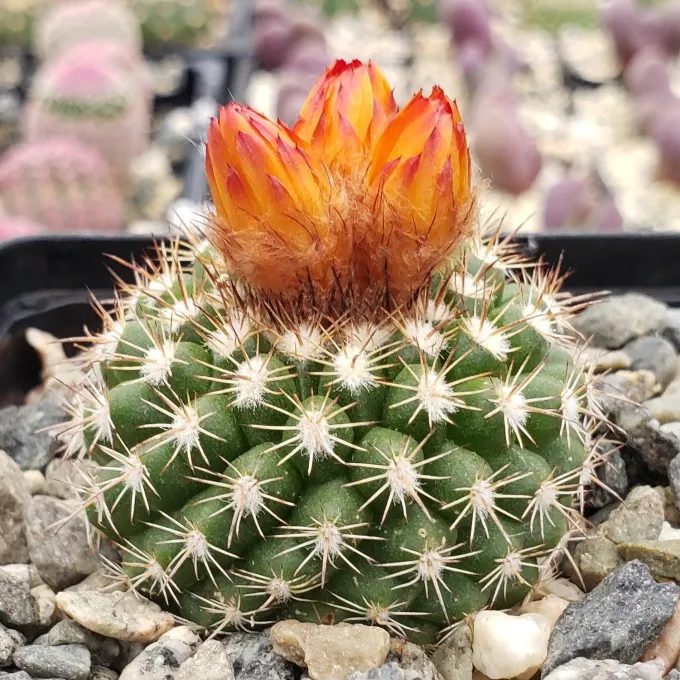
The botanical structure of this cactus features a globular stem with prominent ribs adorned with dense, sharp spines. Its physiological adaptation allows it to store significant moisture during the rare rainy seasons, ensuring survival during the prolonged droughts characteristic of its native habitat.
In terms of agricultural requirements, Parodia mairanana demands a specialized mineral-based substrate. The soil mix should consist of coarse sand, perlite, and a small portion of organic matter, ensuring exceptional drainage to prevent root rot, which is the primary challenge in its cultivation.
Climate needs are strictly defined: it requires high levels of bright, indirect sunlight to maintain its compact shape and healthy spine coloration. During the active growing season, temperature should be kept between 20°C and 28°C, while a dry, cool winter period (10°C to 15°C) is essential to trigger spring flowering.
This species is widely used in ornamental horticulture as a prized specimen for greenhouse collections and indoor displays. Its aesthetic appeal is enhanced by its vibrant, funnel-shaped blossoms that appear in cycles, making it a focal point for enthusiasts of South American cacti.
Main diseases and pests
The most significant threats to Parodia mairanana are fungal infections resulting from overwatering or poorly aerated growing media. These pathogens often manifest as discolored lesions at the base of the stem, eventually leading to rapid tissue decay and the potential loss of the entire specimen.
Pest management is equally critical, with spider mites and mealybugs being the most common culprits that infest the dense spine clusters. Implementing a regular monitoring program, combined with the application of appropriate systemic insecticides when necessary, is the most effective strategy to protect the plant.