

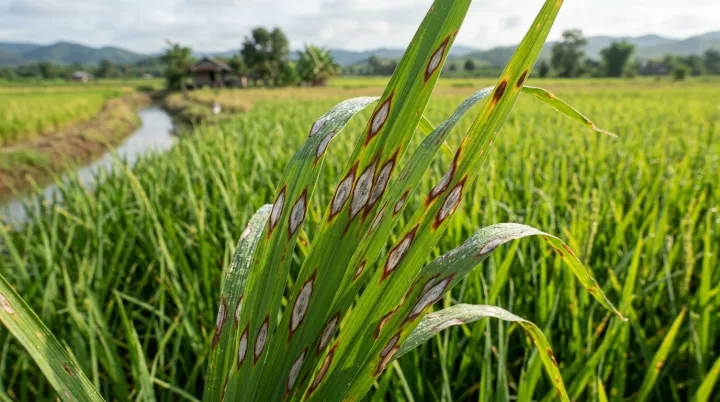
Description
Symptoms
Rice blast symptoms occur on all above-ground plant parts, including leaves, leaf sheaths, stems, and panicles. On leaves, the disease manifests as spindle-shaped or diamond-shaped lesions with greyish-white centers and yellow or brown margins.
When the infection is severe, these lesions coalesce, leading to rapid yellowing and necrosis of the entire leaf blade. Infections at the stem nodes cause blackening, tissue softening, and often result in the lodging of the culm at the point of infection.
The most devastating symptom is the panicle blast, often called "rotten neck." The fungus infects the base of the panicle, disrupting nutrient flow, which causes the panicle to become brittle and turn a grey or ashen color.
Grains on affected panicles either fail to develop or remain shriveled and of poor quality. Under high humidity, a velvety, olive-grey fungal growth, consisting of conidia, appears on the surface of infected tissues.
Fields affected by the disease show a patchy appearance, with stunted, drooping, and prematurely yellowing plants clearly standing out against the healthy portion of the crop.
Pathogen
The causal agent of the disease is the anamorphic fungus Pyricularia oryzae (synonym Magnaporthe oryzae), which belongs to the class Ascomycetes. It is a highly specialized pathogen that primarily targets rice plants.
The fungus possesses septate mycelium that invades host tissues, destroying cells and absorbing essential nutrients. The pathogen survives in crop debris, infested seeds, and alternative grass weed hosts.
Conidia serve as the primary reproductive units, produced on branched conidiophores emerging from the plant's stomata. These conidia are typically pear-shaped, hyaline, and contain two septa.
Dissemination occurs via wind, water splashes, and irrigation currents. During a single growing season, the pathogen can complete several infection cycles, which explains its ability to trigger explosive epidemics.
The fungus exhibits high genetic variability, allowing it to rapidly adapt to resistant rice varieties by developing new physiological races that can overcome existing plant immunity.
Conditions for development
Rice blast thrives under conditions of high relative humidity (above 90%) and moderate temperatures between 22°C and 28°C. High moisture combined with dense plant spacing creates an optimal microclimate for infection.
Frequent fog, heavy dew, and prolonged rainfall during critical growth stages like tillering and heading facilitate mass infection. Reduced sunlight exposure also weakens the plant's natural resistance.
Agronomic factors, particularly the excessive application of nitrogen fertilizers, promote rapid vegetative growth. This excess nitrogen softens the plant tissues, making them highly susceptible to fungal penetration.
Improper water management, such as the drying out of rice paddies, places the plants under significant stress, compromising their immune response. Poor circulation of stagnant water also promotes the buildup of fungal spores in the soil.
Diurnal temperature fluctuations enhance moisture condensation on leaf surfaces, providing the liquid film necessary for spore germination and successful infection.
Why it matters
Rice blast is considered the most destructive disease of rice globally, capable of destroying up to 70–80% of the yield under favorable conditions. In outbreak years, losses can be economically catastrophic.
The disease reduces the photosynthetic area of leaves, disrupting the plant's ability to accumulate biomass. This results in stunted growth and the premature death of tillers during the vegetative phase.
Panicle infection leads to "empty heads" because the grain fails to fill properly. If grain does develop, it is typically shriveled and light, leading to significantly lower yields and poor milling quality.
Infested seeds lose viability and become the source of primary inoculum for subsequent seasons, complicating seed production and requiring extensive quarantine and disinfection measures.
Economic impacts run into billions of dollars annually worldwide, driven not just by crop loss but by the high costs of frequent and intensive fungicide applications required to keep the disease in check.
Protection
The cornerstone of management is the use of genetically resistant or tolerant rice varieties. Planting high-quality, certified, and fungicide-treated seeds significantly lowers the risk of introducing the pathogen to the field.
Crop rotation and the thorough incorporation of crop residues into the soil deprive the fungus of its primary overwintering sites. It is also crucial to eradicate alternative weed hosts in and around the paddies.
Balanced fertilization, particularly the judicious use of nitrogen, enhances plant resilience. Potassium application is highly recommended as it strengthens cell walls, making them harder for the fungus to penetrate.
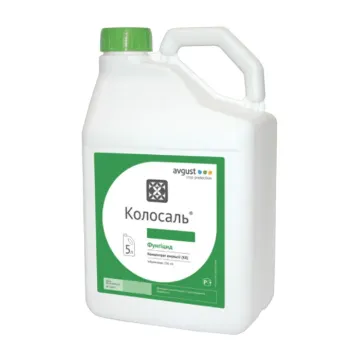
Chemical control involves the application of systemic fungicides during critical phases, such as the start of booting and heading. Effective options include triazoles, strobilurins, and specific systemic fungicides.
Proper water management, ensuring consistent flow and avoiding sudden drainage, prevents stagnant conditions that favor pathogen development, thereby maintaining a healthier balance in the agroecosystem.
Content graph
Connections · Rice Blast
Most often together:
Marketplace
Products · 89








Community
Discussion
No discussions yet — be the first.