

SKU #67890
·
60 views
Arbalet
Rice
User rating
0 votes0% positive reviews
No ratings yet — be the first.
Yield
7-8, 8-9
Growing Season
115-120
Variety Characteristics
High-yielding
Registration year
2017
About product
ARBALAT is a late-maturing rice variety (Oryza sativa L.) of the Italica type, developed to meet modern agricultural requirements. It is recommended for cultivation in the West-Delta zone of Krasnodar Krai and included in the State Register for the North Caucasus region. The vegetative period is 120-136 days, allowing for a stable yield in the region's conditions. The variety's lineage traces back…
Yield
7-8, 8-9
Growing Season
115-120
Variety Characteristics
High-yielding
Registration year
2017
Description
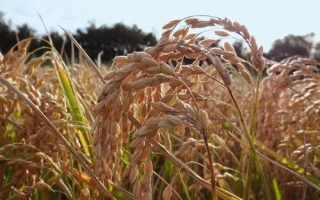
ARBALAT is a late-maturing rice variety (Oryza sativa L.) of the Italica type, developed to meet modern agricultural requirements. It is recommended for cultivation in the West-Delta zone of Krasnodar Krai and included in the State Register for the North Caucasus region. The vegetative period is 120-136 days, allowing for a stable yield in the region's conditions. The variety's lineage traces back to the Yantar variety, ensuring high quality and adaptability.
The variety is characterized by high yield—the average yield in the region reaches 79.7 c/ha, which is 7.7 c/ha higher than the standard average, while in the West-Delta zone of Krasnodar Krai, the yield reaches 87.0 c/ha, exceeding the Atlant standard by 10.4 c/ha. The maximum yield recorded in 2015 was 100.2 c/ha. The rice has high resistance to lodging and shattering, which significantly facilitates harvesting and reduces grain loss. The weight of 1000 grains varies from 33 to 37 grams, which is 7 grams more than the Atlant variety.
The technological and culinary characteristics of the ARBALAT variety are excellent, making it valuable in terms of quality. The rice has moderate resistance to pyricularia, requiring adherence to agronomic measures for crop protection. The stem is of medium length, the panicle is of medium length with moderate bending of the main axis, and the grain is semi-sword-shaped—sword-shaped, medium and long length, which positively affects its processing and cooking.
The variety is characterized by high yield—the average yield in the region reaches 79.7 c/ha, which is 7.7 c/ha higher than the standard average, while in the West-Delta zone of Krasnodar Krai, the yield reaches 87.0 c/ha, exceeding the Atlant standard by 10.4 c/ha. The maximum yield recorded in 2015 was 100.2 c/ha. The rice has high resistance to lodging and shattering, which significantly facilitates harvesting and reduces grain loss. The weight of 1000 grains varies from 33 to 37 grams, which is 7 grams more than the Atlant variety.
The technological and culinary characteristics of the ARBALAT variety are excellent, making it valuable in terms of quality. The rice has moderate resistance to pyricularia, requiring adherence to agronomic measures for crop protection. The stem is of medium length, the panicle is of medium length with moderate bending of the main axis, and the grain is semi-sword-shaped—sword-shaped, medium and long length, which positively affects its processing and cooking.
Crop & resistance
Disease resistance
Specifications hover over for a hint about the specification
|
Yield
Yield
Overall bulb harvest per unit area. Depends on both onion variety characteristics and agronomic practices, fertilizers, and irrigation. Under optimal growing conditions, an onion yield of 100 tons per hectare and above is not considered record-breaking. |
7-8, 8-9 |
|---|---|
| Growing Season | 115-120 |
| Variety Characteristics | |
| Registration year | 2017 |
| Catalog | Catalog → Rice |
| Legal data |
Show · 1
|
| Country | Russia |
Store offers
Prices are updated on loadLoading offers…
Aggregator catalog: prices are collected automatically from store websites, normalized by AI and converted at the current exchange rate. Before ordering, confirm the price and availability on the store's website. This block is not indexed by search engines — the data is loaded after the page opens.
Not yet комментариев. Be the first!


See also
Often considered together with this variety







Recently viewed
Products you’ve viewed on this site
Reviews · 0