

Description
Symptoms
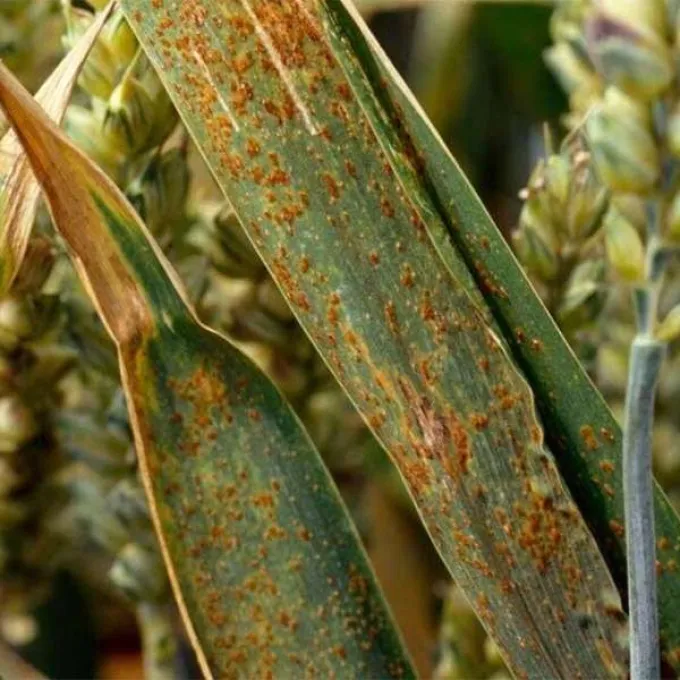
Early signs of wheat leaf rust manifest as small, round to oval pustules that appear in a random, scattered pattern on the leaf blades.
These pustules are typically orange-brown in color, rupturing the leaf epidermis to release a powdery mass of urediniospores that easily rub off on touch.
As the infection progresses, large areas of the leaf surface become covered in these rusty pustules, leading to chlorosis and eventual necrosis of the entire leaf.
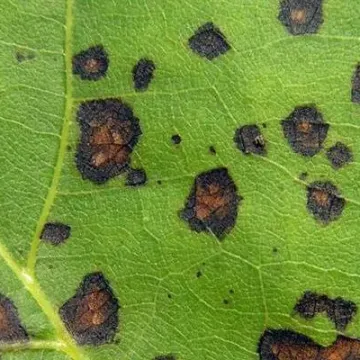
In the later stages of the growing season, small black, elongated telia may form, usually on the underside of the leaves, indicating the end of the active infection cycle.
- Orange-brown pustules on leaves
- Powdery spore masses covering foliage
- Yellowing and premature senescence of leaves
- Black telia formation in late stages
Pathogen
The causal agent of wheat leaf rust is the fungus Puccinia triticina, a highly specialized basidiomycete that specifically targets wheat and related grass species.
This pathogen is an obligate parasite, meaning it requires living host tissue to complete its life cycle and survive, making it dependent on winter wheat or volunteer plants.
The fungus is characterized by its high genetic diversity, producing numerous physiological races that can quickly overcome the resistance genes of wheat cultivars.
It reproduces through urediniospores, which are wind-dispersed and can travel hundreds of kilometers, facilitating rapid spread across agricultural regions.
During the dormant period or harsh conditions, the fungus may form teliospores, but its primary survival strategy remains the mycelium within winter wheat leaves.
Conditions for development
Wheat leaf rust thrives in moderate temperatures, with an optimal range between 15 and 25 degrees Celsius being ideal for rapid fungal development.
The presence of free moisture, such as dew, light rain, or high humidity (above 90%), is strictly necessary for the germination of spores on the plant surface.
Dense crop canopies and areas with high morning humidity provide a protected microclimate that accelerates the spread of the disease within the field.
The pathogen is highly responsive to weather patterns, and years with mild winters often lead to earlier and more severe spring outbreaks.
Excessive nitrogen fertilization can result in lush, succulent leaf growth that is particularly susceptible to fungal penetration and rapid colonization.
Why it matters
The primary damage caused by leaf rust is the loss of photosynthetic area, which significantly reduces the plant's ability to produce sugars for grain filling.
Infected plants produce smaller, shriveled kernels, which leads to reduced grain weight, poor test weight, and lower overall crop yield quality.
Severe epidemics can cause yield losses of up to 30 to 50 percent, particularly when infection occurs early in the flag leaf development stage.
The disease forces the plant into premature maturation, preventing the grain from reaching its full genetic potential and nutritional value.
Reduced grain quality often negatively impacts the milling and baking performance, leading to substantial economic losses for the farmer.
Protection
The most sustainable and effective management strategy is the planting of wheat varieties that carry resistant genes to the prevalent races of leaf rust.
Good agronomic practices, such as eliminating volunteer wheat and adjusting planting dates to avoid peak spore dispersal, help mitigate infection risks.
Fungicide application is essential during the flag leaf emergence period if monitoring reveals the onset of the disease, especially in high-yield environments.
Balanced soil fertility, with appropriate levels of phosphorus and potassium, helps the plant maintain vigor and natural resistance to the pathogen.
Regular field scouting is critical to identify initial infections early, allowing for targeted and timely control measures before the disease reaches epidemic levels.
Reference
Connections · Wheat leaf rust
Most often together:
Marketplace
Products · 1931
















Community
Discussion
No discussions yet — be the first.