

Disease · fungal · affects Alfalfa, Banana, Browallia speciosa
Especially harmful
Fusarium wilt
Fusarium
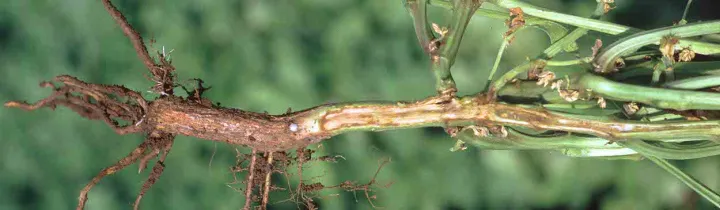
Description
Symptoms
The classic symptom is a progressive yellowing of the lower leaves, often starting on one side of the plant and moving upwards as the infection spreads.
When the stem or root crown is cross-sectioned, a distinctive dark brown or reddish-brown discoloration of the vascular ring is visible to the naked eye.
Plants often show transient wilting during the heat of the day, which becomes permanent as the vascular damage progresses and root function fails.
The disease affects a wide range of host plants, including peanut, winter rapeseed, turnip, Browallia speciosa, industrial hemp, pepper, safflower, and chickpea.
Under humid conditions, a whitish to salmon-colored mold (sporulation) may appear on the surface of the stem near the soil level, indicating advanced infection.
Pathogen
Fusarium wilt is caused by pathogenic fungi of the genus Fusarium, with Fusarium oxysporum being the most prevalent and destructive species.
This is a soil-borne fungus that produces resistant structures called chlamydospores, allowing the pathogen to survive in the soil for many years without a host.
The fungus enters plants primarily through the root system, often utilizing wounds or natural openings in the root cortex to gain access to the vascular tissue.
Once inside, the fungal mycelium colonizes the xylem vessels, multiplying rapidly and obstructing the upward transport of water and mineral nutrients.
Beyond physical blockage, the fungus produces secondary metabolites, including mycotoxins like fusaric acid, which contribute to cell necrosis and systemic wilting.
Conditions for development
Fusarium wilt development is strongly favored by warm soil temperatures, generally between 20°C and 28°C (68°F–82°F), making it a significant issue in warmer climates.
High soil moisture levels and poor drainage facilitate the movement of fungal spores and infection of root tissues, especially in poorly aerated soils.
Acidic soil pH is known to exacerbate the severity of the disease, whereas slightly alkaline conditions can sometimes inhibit the rapid proliferation of the fungus.
The build-up of the pathogen in soil is primarily driven by continuous cropping of susceptible plant varieties, leading to high inoculum density.
Environmental stress, such as drought followed by flooding, or damage by root-knot nematodes, significantly increases plant susceptibility to colonization by Fusarium.
Why it matters
Fusarium wilt is considered one of the most economically devastating plant diseases globally, causing significant yield losses in numerous agricultural sectors.
Total crop failure can occur in heavily infested fields, as the infection often leads to premature plant death before the reproductive stage is reached.
The accumulation of mycotoxins produced by the pathogen renders the remaining harvest, such as grains or fruits, unsafe for both human and animal consumption.
The infection results in stunted growth, reduced photosynthetic area, and poor overall vigor, which undermines the crop's ability to resist secondary pests and diseases.
Once established in a field, the pathogen is extremely difficult to eliminate, effectively forcing farmers to switch to resistant cultivars or completely different crop species.
Protection
Management focuses on prevention, as curative treatments are generally ineffective once the vascular system is significantly colonized by the fungus.
The use of high-quality, certified, and fungicide-treated seeds is crucial to prevent the introduction of new pathogenic strains into the soil.
- Implementing long-term crop rotation cycles of 5 years or more.
- Using resistant or tolerant plant varieties developed through breeding programs.
- Maintaining optimal soil pH and ensuring adequate nutrient supply, especially potassium.
- Applying biological control agents, such as beneficial Trichoderma species.
Field hygiene is essential, including the removal and destruction of crop residues that harbor the fungus, and sanitizing farming equipment between fields.
Strategic irrigation management and the control of soil-borne nematodes help reduce the pathways through which the fungus can enter the roots.
In brief
25
Affects crops
Biology
Pathogens and affected parts
Pathogens
Affected plant parts
whole plantroot
Content graph
Affects crops · 25
Content graph
Connections · Fusarium wilt
Most often together:
Marketplace
Products · 3268





























Community
Discussion
No discussions yet — be the first.