
Fusarium wilt of potato
Fusarium avenaceum
Description
Symptoms
Initial symptoms of Fusarium wilt often appear mid-season, characterized by chlorosis (yellowing) of the leaflets, starting from the upper canopy and gradually moving downwards.
Affected plants often show wilting during the hottest parts of the day, with partial recovery occurring at night, until the damage to the vascular tissue becomes irreversible and the plant dies.
A diagnostic feature is the vascular browning visible upon cross-sectioning the lower stem, where the xylem tissue shows a distinct brown or reddish-brown discoloration.
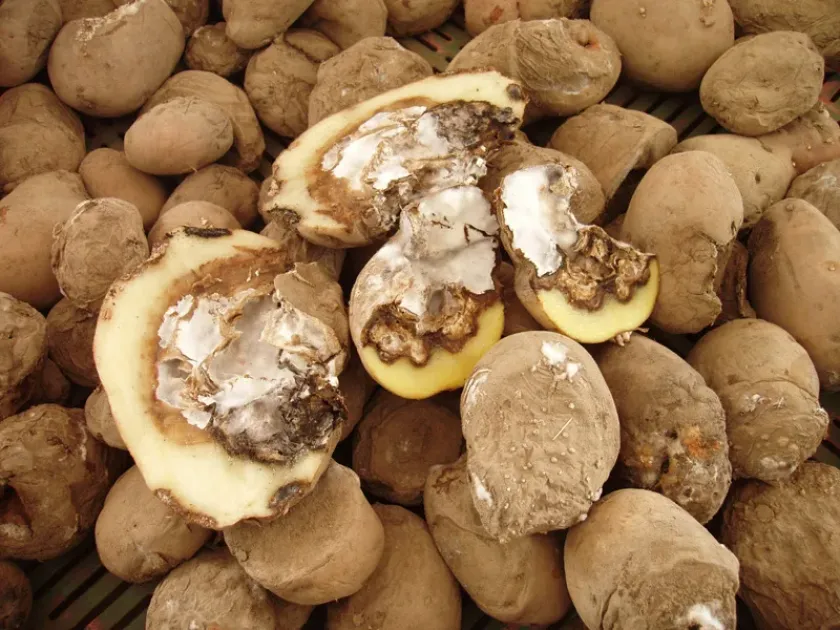
On tubers, the pathogen causes dry rot, appearing as sunken, wrinkled lesions on the skin. Underneath these spots, the tuber tissue becomes light-brown, dry, and friable, often accompanied by white or pink mycelial mats.
In the field, the disease generally appears in patches where the soil conditions are most conducive to fungal proliferation, often correlating with areas of moisture stress or compacted soil.
Pathogen
The causal agent of Fusarium wilt is the soil-borne fungus Fusarium avenaceum. It is a persistent pathogen capable of surviving in soil, crop debris, and tubers for long periods as chlamydospores or mycelium.
The fungus typically enters the potato plant through the root system, often utilizing mechanical injuries or damage caused by soil-dwelling insects to gain entry. Once inside, the mycelium colonizes the vascular bundles.
As it spreads throughout the vascular system, the fungus produces secondary metabolites, including mycotoxins, which impede the transport of water and nutrients to the aerial parts of the plant, leading to systemic wilting.
Fusarium avenaceum is a broad-host-range pathogen, affecting various crops including cereals and vegetables. This wide host range makes it challenging to manage solely through crop rotation protocols.
The spores produced by the fungus are highly mobile and can be easily disseminated across agricultural fields via irrigation water, equipment, and wind, complicating containment efforts during the growing season.
Conditions for development
The development of Fusarium avenaceum is significantly favored by warm weather, with temperatures typically ranging between 20°C and 25°C, coupled with moisture-stressed soils.
Environmental stress, including soil temperature fluctuations and drought periods, reduces the physiological vigor of the potato crop, thereby facilitating the rapid colonization of roots by the fungus.
Over-fertilization with nitrogenous fertilizers encourages excessive lush growth that is often more susceptible to infection compared to more balanced, potassium-strengthened plant tissue.
Heavy, poorly aerated soils create anaerobic conditions that stress the potato root system, making it easier for the soil-borne pathogen to penetrate and establish an infection.
Continuous cropping of potatoes in the same field leads to a buildup of inoculum density, significantly increasing the probability of disease outbreaks in subsequent planting cycles.
Why it matters
Fusarium wilt can result in significant yield losses, often ranging from 30% to 50% under epidemic conditions, severely impacting the farm's economic stability.
Beyond yield reduction, the quality of the harvested tubers is compromised, leading to increased culling rates at harvest and high post-harvest losses during storage due to dry rot development.
Contaminated tubers serve as a primary source of inoculum for the next season, effectively spreading the pathogen to new planting areas and reducing the overall stand density.
The presence of Fusarium-related toxins in the crop can pose risks if the potatoes are intended for livestock feed, leading to potential health issues for animals and economic losses for the farmer.
Management costs are substantial, requiring investments in high-quality certified seeds, fungicide treatments, and meticulous sanitation practices to keep the pathogen population below economic thresholds.
Protection
The primary defense against Fusarium wilt involves the use of high-quality, certified, disease-free seed tubers, combined with the application of effective seed-treatment fungicides.
Adhering to a robust crop rotation plan, rotating potatoes with non-host crops like cereals or small grains every 3–4 years, is essential for reducing the soil inoculum level.
Biological control agents, such as Trichoderma species, have shown promise in suppressing Fusarium populations in the rhizosphere when applied correctly to the soil.
- Use of systemic fungicide seed treatments to protect young plants.
- Maintaining soil fertility through balanced fertilization (specifically potassium and phosphorus).
- Sanitation measures, including removing diseased plants and cleaning equipment between fields.
- Ensuring proper tuber storage conditions with adequate ventilation and cool temperatures.
Post-harvest care, including careful handling to avoid skin abrasions and thorough drying, is critical to preventing the entry of fungi into tubers during the storage phase.
Discussion
No discussions yet — be the first.