
Description
Symptoms
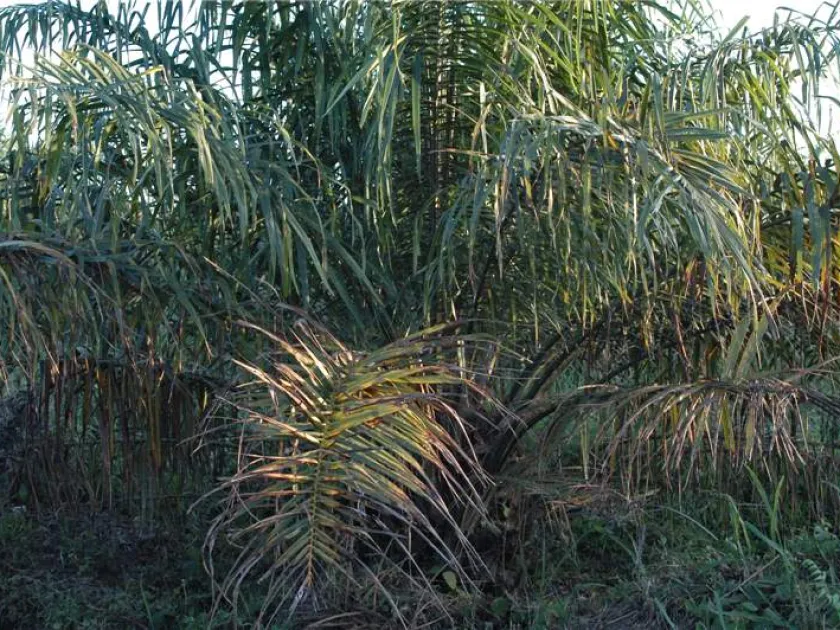
The disease typically begins with the yellowing and subsequent necrosis of older leaves, which progressively spreads to the younger foliage in the palm's crown.
A major symptom includes the rapid and premature shedding of coconuts, often leaving the trees devoid of fruit shortly after the onset of the initial visible signs.
The necrosis of inflorescences and the blackening of young flower spikes are hallmark indicators, signalling that the systemic transport of nutrients has been critically impaired.
When conducting a cross-sectional analysis of the stem, one can observe localized patches of dark, necrotic tissue, indicating the death of the phloem and vascular breakdown.
- Yellowing of lower fronds.
- Premature fruit drop.
- Necrosis of inflorescences.
- Overall loss of plant vigor.
- Terminal bud failure.
Pathogen
The causative agent of Cedros wilt is Phytomonas stahellii, a flagellate protozoan belonging to the Trypanosomatidae family that thrives in the phloem of host plants.
Unlike common fungal or bacterial infections, this pathogen is highly specialized, living exclusively within the sieve tubes of the palm, where it disrupts nutrient transport.
The pathogen is transmitted by insect vectors, specifically certain species of sap-sucking bugs that move the parasite from infected palms to healthy ones during feeding.
Without the presence of these specific insect vectors, the spread of Phytomonas stahellii is geographically contained, making vector control a primary focus of plant pathology.
Microscopic examination of phloem sap remains the gold standard for identification, revealing the presence of mobile, flagellated organisms within the plant's vascular tissues.
Conditions for development
The development of Cedros wilt is strictly correlated with the population density of insect vectors, which flourish in hot and humid tropical climates.
High temperatures and consistent rainfall provide an ideal environment for the life cycle of the insect vectors, leading to increased transmission rates across plantations.
Wind patterns and climate conditions that favor the movement of these insects significantly contribute to the rapid spread of the disease across neighboring coconut groves.
Stressed trees, whether due to poor soil fertility, drought, or inadequate irrigation, are far more susceptible to rapid colonization by the flagellate pathogen.
Monoculture planting patterns, where trees are grown in close proximity, facilitate the ease with which insect vectors can jump from one host to another, fueling outbreaks.
Why it matters
Cedros wilt poses a lethal threat to coconut palms, with affected trees rarely showing signs of recovery and usually dying within a short period after symptom onset.
The economic impact on the agricultural sector is immense, as it leads to the total loss of fruit production and requires the expensive removal of deceased palm trees.
Widespread outbreaks can devastate local coconut economies, threatening the livelihoods of farmers who depend on the consistent production of coconut oil and copra.
The challenge of early detection means that by the time external symptoms are visible, the tree is already severely compromised and essentially lost to the infection.
The cumulative effect of losing entire plantations impacts the regional agricultural landscape, leading to significant land use changes and long-term economic instability.
Protection
Currently, there is no effective curative treatment for palms already infected with Phytomonas stahellii, which shifts the emphasis entirely to preventive management.
The primary control measure involves the systematic identification, felling, and prompt destruction of infected palms to remove the reservoir of the pathogen.
Integrated pest management focusing on the control of the insect vector population is essential to reducing the rate of new infections within a given plantation area.
Strict quarantine measures are recommended to prevent the movement of potentially infected plant materials between different geographical zones and healthy estates.
Future agricultural research is focused on developing resistant cultivars that can withstand infection, which remains the most sustainable approach for the industry.
Pathogens and affected parts
Affects crops · 1
Discussion
No discussions yet — be the first.