
Description
Symptoms
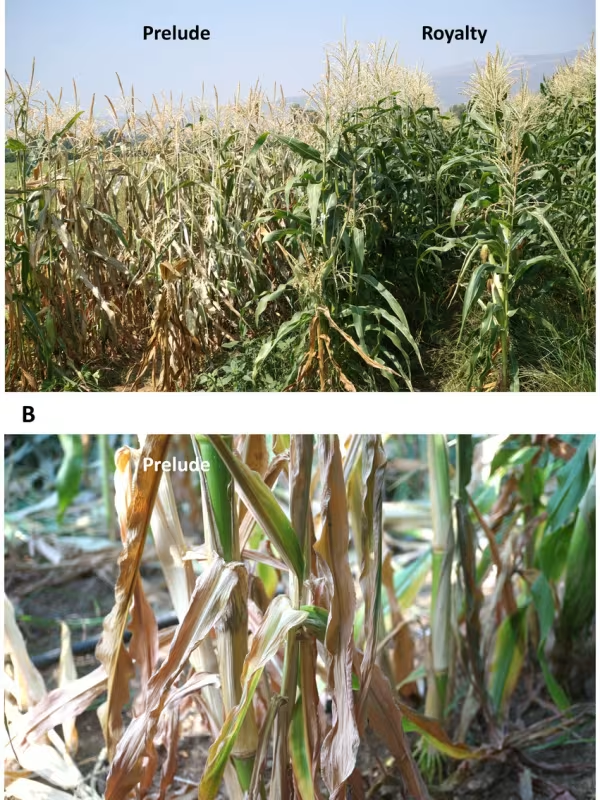
Symptoms typically become visible during the reproductive stage, specifically during flowering and grain fill.
Plants exhibit sudden wilting, with leaves turning greyish-green or straw-colored, despite adequate soil moisture levels.
The lower stalk sections may appear thin and shriveled; when sliced open, the internal tissues show characteristic pinkish-brown vascular discoloration.
Small black sclerotia of the fungus are often visible within the pith of the lower internodes, serving as a key diagnostic indicator.
Root systems of infected plants often show signs of decay, and overall ear development is stunted, resulting in poor grain set.
Pathogen
Late wilt of maize is a vascular disease caused by the soil-borne fungus Magnaporthiopsis maydis (formerly Cephalosporium maydis).
The pathogen survives in the soil as sclerotia, which are highly resilient structures capable of persisting for several seasons under various environmental conditions.
Once conditions are favorable, the fungus infects the roots and colonizes the xylem vessels, blocking the upward movement of water and nutrients.
As the fungus grows within the vascular bundles, it secretes toxins that cause systemic wilting and eventual death of the maize plant.
The pathogen is highly specialized and is known to be a limiting factor in maize production in several regions globally.
Conditions for development
The disease development is heavily dependent on high soil temperatures and moderate to high soil moisture levels during the peak vegetative growth.
Frequent fluctuations between dry and wet spells in the soil can trigger the rapid development of the fungus within the vascular system.
Poor soil aeration and compaction create conditions that favor root stress, making plants more susceptible to the fungal invasion.
Continuous cropping of maize in the same field drastically increases the fungal inoculum density in the soil over time.
Warm climate regions with intensive irrigation management are particularly at risk of widespread late wilt outbreaks.
Why it matters
Late wilt causes significant yield losses by preventing proper grain filling, which results in lightweight, shriveled kernels.
The infection leads to premature plant death, which significantly shortens the growing season and reduces photosynthetic efficiency.
Stalk weakening increases the risk of lodging, causing plants to collapse and complicating the mechanical harvesting process.
Seed quality is severely affected, as grain harvested from infected fields often has low germination rates and poor vigor.
The presence of Magnaporthiopsis maydis in the soil significantly limits the choice of future crops and requires expensive land management practices.
Protection
The most effective strategy is the implementation of a 3 to 4-year crop rotation to break the life cycle of the pathogen.
Growers should prioritize the use of resistant maize hybrids, as genetic resistance is the primary defense against late wilt.
Improving soil drainage and physical structure through tillage practices helps to reduce the survival of sclerotia.
Balanced fertilization, particularly adequate potassium supply, improves plant physiological health and reduces susceptibility to the fungus.
Seed treatment with specific fungicides can provide early-season protection, though it is not a cure for established systemic infections.
Pathogens and affected parts
Affects crops · 1
Discussion
No discussions yet — be the first.