
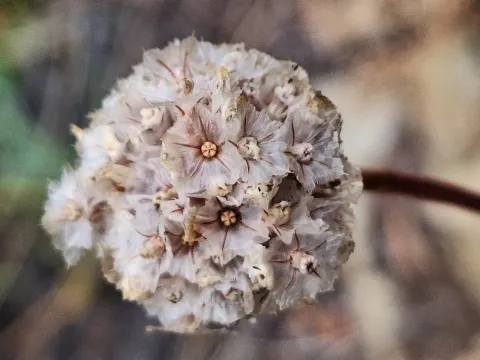
Armeria
Armeria
Armeria (lat. Armeria) is a genus of perennial herbaceous plants belonging to the Plumbaginaceae family. Among the various species, Armeria maritima, commonly known as sea thrift, is the most widely cultivated.
What the section contains
 Alpine thrift
Armeria alpina
Alpine thrift
Armeria alpina
 Armeria arenaria
Armeria arenaria
Armeria arenaria
 Armeria beirana
Armeria belgenciensis
Armeria belgenciensis
Armeria beirana
Armeria beirana
Armeria belgenciensis
Armeria belgenciensis
 Armeria berlengensis
Armeria berlengensis
Armeria berlengensis
 Armeria bubanii
Armeria bubanii
Armeria bubanii
 Armeria caespitosa
Armeria caespitosa
Armeria caespitosa
 Armeria canescens
Armeria filicaulis
Armeria filicaulis
Armeria canescens
Armeria canescens
Armeria filicaulis
Armeria filicaulis
 Armeria gaditana
Armeria gaditana
Armeria gaditana
 Armeria genesiana
Armeria genesiana
Armeria genesiana
 Armeria girardii
Armeria girardii
Armeria girardii
 Armeria humilis
Armeria humilis
Armeria humilis
 Armeria hybrids
Armeria hybrids
Armeria hybrids
 Armeria langei
Armeria leucocephala
Armeria leucocephala
Armeria langei
Armeria langei
Armeria leucocephala
Armeria leucocephala
 Armeria linkiana
Armeria multiceps
Armeria multiceps
Armeria neglecta
Armeria neglecta
Armeria linkiana
Armeria linkiana
Armeria multiceps
Armeria multiceps
Armeria neglecta
Armeria neglecta
 Armeria pinifolia
Armeria pocutica
Armeria pocutica
Armeria pinifolia
Armeria pinifolia
Armeria pocutica
Armeria pocutica
 Armeria pubigera
Armeria pubigera
Armeria pubigera
 Armeria pungens
Armeria pungens
Armeria pungens
 Armeria rouyana
Armeria rouyana
Armeria rouyana
 Armeria rumelica
Armeria rumelica
Armeria rumelica
 Armeria ruscinonensis
Armeria ruscinonensis
Armeria ruscinonensis
 Armeria sampaioi
Armeria sampaioi
Armeria sampaioi
 Armeria soleirolii
Armeria soleirolii
Armeria soleirolii
 Armeria transmontana
Armeria transmontana
Armeria transmontana
 Armeria undulata
Armeria undulata
Armeria undulata
 Armeria velutina
Armeria velutina
Armeria velutina
 Armeria villosa
Armeria villosa
Armeria villosa
 Armeria welwitschii
Armeria welwitschii
Armeria welwitschii
 Large-leaved thrift
Armeria macrophylla
Large-leaved thrift
Armeria macrophylla
 Madeira thrift
Armeria maderensis
Madeira thrift
Armeria maderensis
 Sea thrift
Armeria purpurea
Sea thrift
Armeria purpurea
 Woolly-leaved thrift
Armeria eriophylla
Woolly-leaved thrift
Armeria eriophylla
Armeria
Seeds are typically sown in late February or March indoors. To ensure uniform germination, seeds benefit from a period of cold stratification before being moved to warmer temperatures.
Direct sowing in the open ground can be done in early spring after the soil has thawed. Seeds should be sown at a shallow depth, lightly covered with fine soil or sand to maintain moisture.
Once seedlings have developed a few true leaves, they can be transplanted or thinned to their final growing positions, maintaining a spacing of approximately 20 to 30 cm between plants.
Vegetative propagation is achieved through division of the root clumps. This should be performed every 3–5 years to rejuvenate the plants and maintain their vigor and flowering intensity.
Armeria thrives in open, sunny locations with direct sunlight. It is essential to provide full sun to ensure the plant develops compact foliage and produces a profusion of flowers.
The soil requirements focus heavily on drainage. Armeria is highly susceptible to root rot if left in waterlogged conditions; therefore, sandy or gritty, well-draining soil is mandatory.
The plant prefers neutral to slightly acidic soil pH. Avoid planting in soils with high lime content, as this can easily lead to iron chlorosis and yellowing of the foliage.
Climatic conditions should favor moderate moisture. While the plant is drought-tolerant once established, consistent but moderate watering during the growing season promotes better health.
Armeria is notably cold-hardy, capable of surviving harsh winters in most temperate regions without the need for protective mulch, though a layer of pine needles can protect it in extreme cases.
The primary threat to Armeria is excessive soil moisture, which inevitably leads to fungal infections and root decay. Proper site selection and soil preparation are the best defenses.
Leaf spot is the most common fungal disease, typically occurring during periods of high humidity and poor air circulation. Thinning out plantings can mitigate this issue effectively.
Pests such as aphids may occasionally infest the flower stalks. These insects extract sap and can cause the buds to deform if left untreated throughout the spring season.
Management of fungal diseases involves the application of appropriate fungicides and ensuring the foliage stays dry. Always prioritize cultural practices like spacing over chemical use.
Pest control should be handled using standard insecticides. Regular inspection of the plant base and flower heads will help identify infestations early before they spread across the garden.
For horticultural purposes, harvesting Armeria involves deadheading spent blooms. This prevents self-seeding and encourages the plant to put energy into further flower production.
Seed collection is possible once the seed heads dry and turn brown. Care must be taken to harvest them before the capsules burst to prevent the loss of potential planting material.
For dried floral arrangements, flower stalks are harvested at the peak of bloom. They should be hung upside down in a dark, well-ventilated room to preserve their shape and color.
No major pruning is required for Armeria in the autumn. The evergreen basal rosettes of leaves should remain undisturbed as they provide year-round interest in the landscape.
Armeria is primarily utilized in landscaping as a ground cover for rock gardens, alpine beds, and borders, or as a salt-tolerant species for coastal planting projects.