
Ceratostigma
Ceratostigma
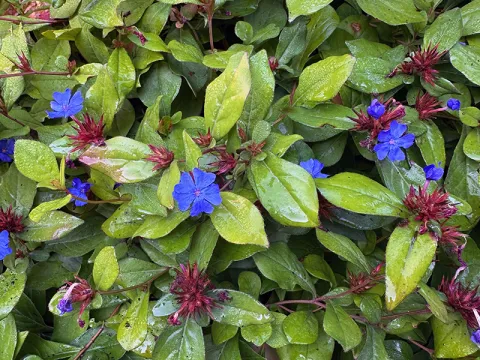
Ceratostigma is a genus of perennial flowering plants belonging to the Plumbaginaceae family. These plants are widely valued in horticulture for their striking, cobalt-blue flowers and their ability to provide late-season color in the garden when most other perennials have finished blooming.
What the section contains

Ceratostigma
Native to warm temperate and subtropical regions of Asia and Africa, Ceratostigma species are adapted to varying light and moisture conditions. They are typically utilized as ground covers, rock garden specimens, or as low-growing shrubs in mixed borders, adding texture with their lanceolate leaves.
Optimal growth requires well-drained soil with a slightly acidic to neutral pH. It is essential to ensure the planting site does not suffer from waterlogging, as the root systems of these plants are prone to rotting in excessively damp, heavy soils, especially during the dormant winter period.
The plant thrives in full sun, which is necessary to trigger its signature late-summer to autumn flowering phase. While they can tolerate partial shade, exposure to bright sunlight ensures stronger stems and a more compact growth habit, preventing the plant from becoming overly sparse.
Agronomic management includes regular but moderate irrigation, particularly during dry spells in summer. Hardiness can be an issue in colder climates, where applying a thick layer of organic mulch around the base in late autumn is a standard practice to protect the crown from freezing temperatures.
Disease pressure in Ceratostigma is usually low, provided the site is well-drained. The most common issues arise from high humidity and poor air circulation, which can facilitate powdery mildew. Maintaining spacing between plants and ensuring good ventilation are key preventative measures.
Pest problems are generally limited to occasional infestations of aphids or spider mites. These are typically managed through regular monitoring and the application of insecticidal soaps or horticultural oils if the infestation threshold is exceeded, ensuring the plant's aesthetic value remains intact.