
Armeria caespitosa
Armeria caespitosa
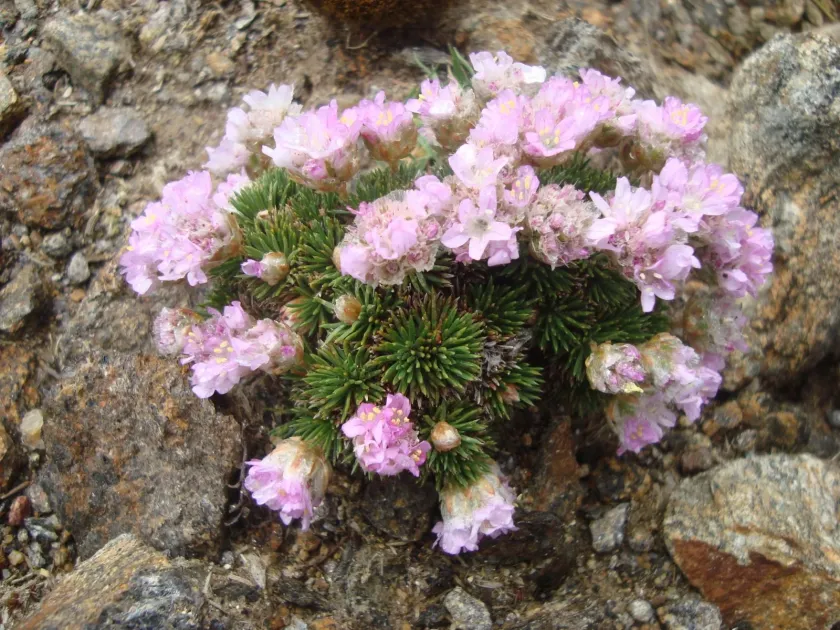
Description
Sowing dates
Sowing seeds of Armeria caespitosa in open ground is best performed in late autumn, just before the first frosts. This allows the seeds to undergo natural stratification, which is essential for achieving a higher germination rate.
In greenhouse conditions, seeds should be sown in March or April using shallow trays filled with a light, sandy substrate. It is important to maintain a stable temperature of approximately 18–20 degrees Celsius to ensure successful germination.
Seedlings should only be transplanted to their permanent garden location once the threat of night frosts has passed, typically in late May or early June. Proper spacing of 20–30 centimeters between plants is necessary for adequate air circulation.
Division of mature clumps is a reliable propagation method, ideally performed every three years. This procedure is best executed in early spring or autumn by carefully separating the dense mat into several healthy portions with intact root systems.
Cuttings represent another effective way to multiply the stock, where young rosettes are detached from the parent plant throughout the summer. Rooting should take place in moist, gritty sand under cover to maintain high local humidity.
Growing requirements
Armeria caespitosa is a perennial herbaceous plant belonging to the Plumbaginaceae family. Originally native to rocky alpine regions, it has developed excellent drought tolerance and thrives in low-nutrient, poor soils.
The plant requires full sun exposure to maintain its characteristic compact, cushion-like growth habit. Insufficient light leads to elongated stems, poor structural integrity, and a significant reduction in flower production.
Well-draining, sandy, or gritty soils are optimal for this species. Armeria is highly sensitive to waterlogged conditions, which can cause crown and root rot, leading to the rapid decay of the plant's dense mat.
It adapts well to neutral or slightly acidic soil environments. If garden soil is primarily heavy clay, it is essential to amend the planting hole with a mix of coarse sand, gravel, or crushed stone to ensure efficient drainage.
During the active growth phase, moderate watering is beneficial, though established plants are highly resistant to extended drought. Excessive use of fertilizers should be avoided, as it encourages weak, lush growth that reduces the plant's natural charm.
Main diseases and pests
Aphids represent the primary pest threat to Armeria caespitosa, as they feed on the sap of young flower stalks and foliage. Management involves the application of systemic insecticides or gentle washing with insecticidal soaps.
Poor drainage and improper watering schedules often lead to root rot caused by various soil-borne fungal pathogens. Preventive care includes ensuring the substrate is porous and removing any dead or decaying plant material immediately.
Leaf spot diseases may occasionally affect plants during cool, wet summers. Affected foliage should be promptly removed, and the plant may be treated with appropriate fungicides to prevent further spread.
Nematodes can potentially damage the root system, causing the plant to wither and decline. If root infestation is suspected, the entire plant should be carefully removed and destroyed to prevent the pest from migrating to nearby specimens.
A proactive approach to health involves maintaining optimal growing conditions, as a healthy Armeria plant in a suitable rocky environment possesses a strong natural resilience against common garden pests and diseases.