
Alpine thrift
Armeria alpina
Description
Sowing dates
Alpine thrift (Armeria alpina) is a perennial herbaceous plant belonging to the Plumbaginaceae family. Native to the mountainous regions of Europe, it is well-adapted to harsh conditions and rocky terrains.
Propagation is primarily achieved through seeds or by dividing established clumps. Sowing is typically performed in late autumn or early spring, with seeds benefiting from cold stratification to improve germination rates.
For greenhouse production, seeds are sown in March into well-drained, sterile media. Seedlings grow slowly and require ample light to develop a sturdy structure before they are ready for transplanting.
Transplanting into the permanent garden site should occur after the threat of frost has passed. Plants are usually spaced 20–30 centimeters apart to allow for proper airflow around the base of the plant.
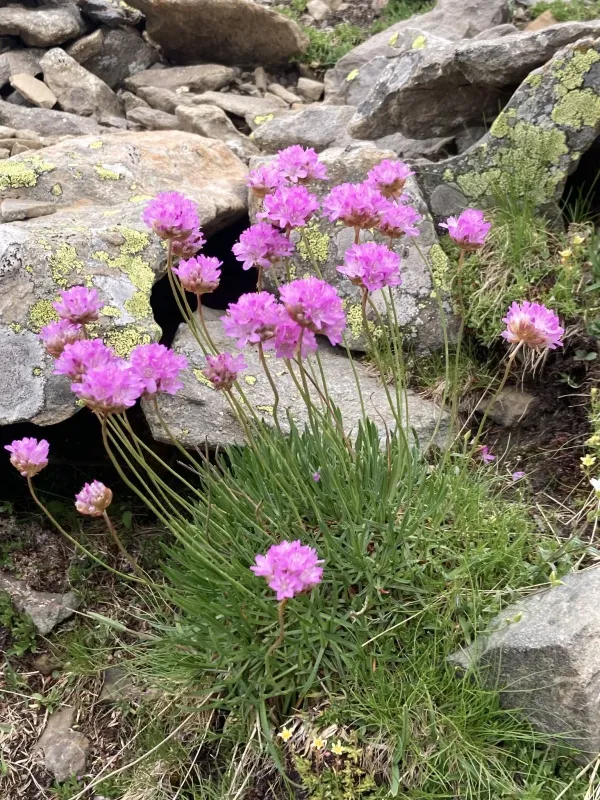
The plant is characterized by its basal rosettes of linear leaves and vibrant, globe-shaped flower heads held aloft on leafless stems, making it a popular choice for rock gardens and borders.
Growing requirements
Alpine thrift requires specific environmental conditions to thrive, primarily emphasizing its preference for full sun. Exposure to direct sunlight is essential for maintaining the plant's compact form and promoting heavy flowering.
The soil must be sandy or gravelly, with excellent drainage and a neutral to slightly acidic pH. Avoiding heavy clay soils is vital, as they retain too much moisture, which is detrimental to the plant's root system.
While the plant is drought-tolerant once established, it performs best when provided with occasional deep watering during prolonged dry spells. Over-watering is the most common cause of failure in cultivation.
Minimal fertilization is required; applying a balanced, slow-release fertilizer once in the spring is generally sufficient. Excessive nitrogen should be avoided as it encourages leafy growth rather than bloom.
Maintenance tasks include "deadheading," which involves removing spent flowers to encourage further blooming throughout the summer season and keeping the plant tidy.
Main diseases and pests
The primary threats to Alpine thrift are related to excess moisture, which encourages fungal diseases. Gray mold (Botrytis) and root rot are significant concerns in poorly drained soils.
Leaf spot can also occur in humid environments with poor air circulation. Ensuring that the foliage stays dry and the planting site is well-ventilated is the most effective preventative measure.
Pest issues are relatively limited, though aphids can occasionally infest the flower stalks during the spring. Targeted insecticidal soap sprays are typically sufficient to control these outbreaks.
Nematodes may pose a problem in contaminated soil; identifying infested plants early and removing them completely is necessary to prevent the spread of the pathogen.
Regular sanitation, including the removal of dead or decaying foliage at the end of the season, plays a critical role in minimizing disease pressure for the following growth cycle.