
Armeria soleirolii
Armeria soleirolii
Description
Growing requirements
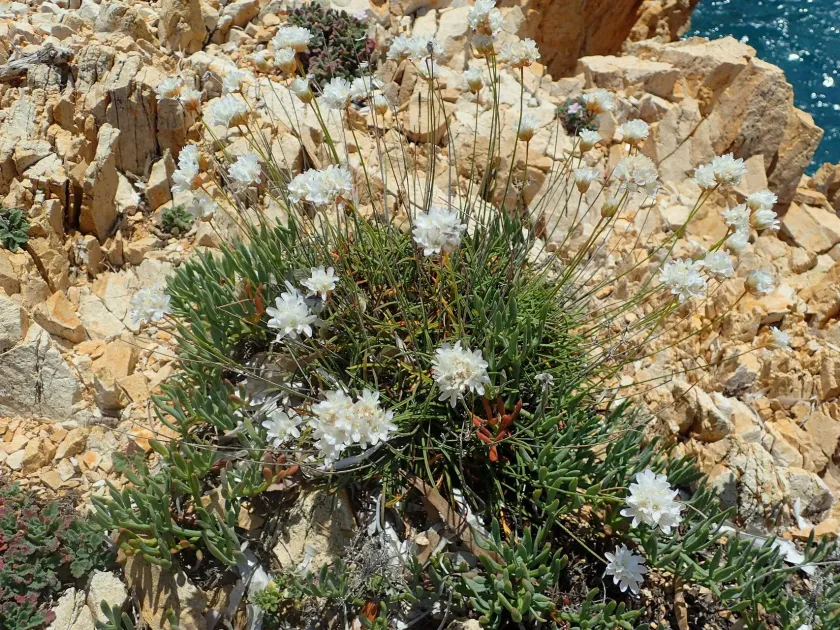
Armeria soleirolii is a perennial herbaceous plant belonging to the Plumbaginaceae family. Native to the island of Corsica, this species is well-adapted to rocky, Mediterranean environments where it thrives in exposed, sun-drenched habitats.
Botanically, it forms tight, compact mounds or cushions of narrow, evergreen, linear leaves. During the blooming season, the plant produces distinctive globe-shaped flower heads held aloft on sturdy, short stalks, creating a vibrant display of color.
The cultural requirements for this plant are quite specific: it demands well-drained, sandy or stony soil. Excellent drainage is critical to success, as the roots are highly susceptible to rot if allowed to sit in waterlogged conditions for extended periods.
This species is highly drought-tolerant and requires full sun to maintain its characteristic compact shape and abundant flowering. In low-light conditions, the cushions tend to become leggy and lose their ornamental value, making sun exposure a primary necessity.
Maintenance is generally low-impact, requiring the occasional removal of spent blooms to encourage new growth. It is considered hardy in temperate climates, though it benefits from protection against excessive winter moisture, which can cause crown damage.
Main diseases and pests
The primary threat to the health of Armeria soleirolii is fungal disease, often triggered by poor drainage or excessive humidity around the base of the plant.
Root rot is the most common pathogen-related issue, frequently resulting from heavy, poorly aerated soils that keep the root system consistently wet during the growing season.
Pests such as aphids can occasionally target the flower stalks, leading to stunted or deformed blossoms if the infestation is left unmanaged by the gardener.
Spider mites represent another potential threat, particularly during prolonged periods of hot and dry weather, which can weaken the plant's structural integrity.
Preventative care involves ensuring proper site selection with sufficient air circulation and avoiding overhead watering, which can encourage the development of leaf spots.