
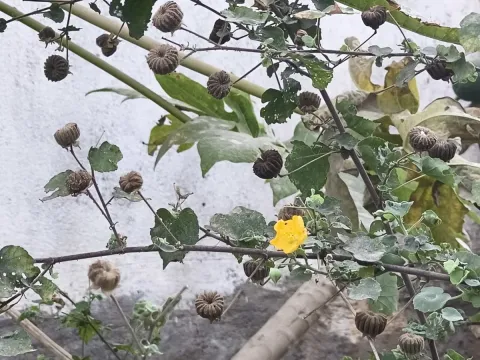
Abutilon
Abutilon
Abutilon, belonging to the Malvaceae family, is a valuable technical crop. For the production of high-quality fiber, sowing is carried out when the soil temperature at the planting depth reaches 12–15 degrees Celsius.
What the section contains
 Abutilon abutiloides
Abutilon abutiloides
Abutilon abutiloides
 Abutilon angulatum
Abutilon angulatum
Abutilon angulatum
 Abutilon auritum
Abutilon auritum
Abutilon auritum
 Abutilon berlandieri
Abutilon berlandieri
Abutilon berlandieri
 Abutilon bidentatum
Abutilon bidentatum
Abutilon bidentatum
 Abutilon eremitopetalum
Abutilon eremitopetalum
Abutilon eremitopetalum
 Abutilon exstipulare
Abutilon exstipulare
Abutilon exstipulare
 Abutilon glabriflorum
Abutilon glabriflorum
Abutilon glabriflorum
 Abutilon grandifolium
Abutilon grandifolium
Abutilon grandifolium
 Abutilon grantii
Abutilon grantii
Abutilon grantii
 Abutilon graveolens
Abutilon graveolens
Abutilon graveolens
 Abutilon guineense
Abutilon guineense
Abutilon guineense
 Abutilon hemsleyanum
Abutilon hemsleyanum
Abutilon hemsleyanum
 Abutilon hulseanum
Abutilon hulseanum
Abutilon hulseanum
 Abutilon hybrid
s
Abutilon hybrid
Abutilon hybrids
 Abutilon hypoleucum
Abutilon hypoleucum
Abutilon hypoleucum
 Abutilon inflatum
Abutilon inflatum
Abutilon inflatum
 Abutilon longicuspe
Abutilon longicuspe
Abutilon longicuspe
 Abutilon mauritianum
Abutilon mauritianum
Abutilon mauritianum
 Abutilon oxycarpum
Abutilon oxycarpum
Abutilon oxycarpum
 Abutilon pannosum
Abutilon pannosum
Abutilon pannosum
 Abutilon pauciflorum
Abutilon pauciflorum
Abutilon pauciflorum
 Abutilon pseudocleistogamum
Abutilon pseudocleistogamum
Abutilon pseudocleistogamum
 Abutilon ramosum
Abutilon ramosum
Abutilon ramosum
 Abutilon trisulcatum
Abutilon trisulcatum
Abutilon trisulcatum
 Abutilon viscosum
Abutilon viscosum
Abutilon viscosum
 Desert Indian Mallow
Abutilon malacum
Desert Indian Mallow
Abutilon malacum
 Hoary Abutilon
Abutilon incanum
Hoary Abutilon
Abutilon incanum
 Indian mallow
Abutilon asiaticum
Indian mallow
Abutilon asiaticum
 Indian mallow
Abutilon hirtum
Indian mallow
Abutilon hirtum
 Palmer's abutilon
Abutilon palmeri
Palmer's abutilon
Abutilon palmeri
 Persian abutilon
Abutilon persicum
Persian abutilon
Abutilon persicum
 Shrubby abutilon
Abutilon fruticosum
Shrubby abutilon
Abutilon fruticosum
 Sonnerat's abutilon
Abutilon sonneratianum
Sonnerat's abutilon
Abutilon sonneratianum
Abutilon
In temperate climate regions, sowing occurs in late spring to avoid late frosts that are detrimental to young seedlings. Optimal plant density is critical for forming upright stems suitable for industrial processing.
The sowing technology involves using row-crop or strip-tillage methods, ensuring optimal light and nutrient access for each plant. Correct timing allows the crop to accumulate the necessary vegetative mass.
Abutilon seeds require prior calibration and preparation to achieve maximum field emergence. The use of high-quality seed material is the foundation for a successful yield of industrial fiber.
An important stage is the adherence to crop rotation, where Abutilon is not returned to the same field for at least three to four years, which prevents the accumulation of soil-borne pathogens.
Abutilon is a heat-loving plant that requires stable temperature conditions throughout the entire growing season. The crop demonstrates a high need for intense solar radiation for normal photosynthesis processes.
Soils for cultivation must be fertile, with a neutral or slightly acidic reaction and good aeration. Excessive waterlogging of the soil can lead to the development of root rots, making poorly drained sites unsuitable.
The plant responds well to the application of organic fertilizers, which improve soil structure and moisture retention. During active growth, Abutilon requires regular but moderate watering, especially during dry summers.
Wind protection is also an important requirement, as the tall stems of the plant can be damaged by strong gusts, negatively affecting the quality of the fiber produced.
Agronomic practices include timely weed control during the early development phases, until Abutilon plants close their rows and become competitive against weeds.
The economic value of Abutilon lies in the high productivity of its stems, which contain strong bast fiber. Yield of green mass depends directly on soil fertility and the level of agronomic care throughout the season.
Under optimal cultivation conditions, the fiber yield per hectare reaches significant levels, comparable to other bast fiber crops. Yield also depends on the genetic traits of a specific cultivar.
The biological potential of the species allows for stable yields, provided that nutrient and moisture regimes are maintained. The maximum concentration of fiber is observed during the early flowering phase.
The quality of the harvest is determined not only by quantitative indicators but also by the maturity of the fiber. Timely harvesting is essential to prevent stem coarsening and loss of elasticity.
Efficient processing of the crop allows Abutilon to be used in the production of ropes, twine, burlap, and high-quality paper, making the crop economically attractive.
Abutilon can be affected by a number of pests, the most dangerous of which are aphids, spider mites, and whiteflies. These insects suck sap from young leaves, causing shoot deformation and overall plant suppression.
Among fungal diseases, the greatest threats are Fusarium wilt and various types of leaf spots. Pathogens of these diseases actively develop in high humidity and poor field ventilation.
To prevent the spread of diseases, it is necessary to strictly monitor the phytosanitary condition of the crops and promptly remove affected specimens. Preventive measures significantly reduce the risk of epiphytotics.
In case of massive pest infestation, authorized selective insecticides that are safe for beneficial entomophages are used. However, the main focus in crop protection is on adhering to proper agronomic practices.
Monitoring the condition of crops should be done weekly, paying special attention to the underside of the leaves, where colonies of harmful insects most often concentrate.
Harvesting of Abutilon is carried out during the period when the plant reaches the stage of technical maturity, which usually coincides with the beginning of flowering. At this moment, the stems possess maximum flexibility and strength.
Specialized machinery, such as reapers or harvesters for bast crops, is used, ensuring stems are cut at the lowest possible height. Uniformity of the cut is important for mechanized processing.
After cutting, the stems undergo a retting process, during which partial decomposition of pectin substances holding the fiber together occurs. This facilitates the separation of the bast layer from the stem core (hurd).
To speed up drying, the cut mass is formed into small windrows or sheaves, ensuring free air circulation. It is important to avoid over-drying, as this reduces fiber quality.
The final stage is the primary processing of the collected raw material at specialized facilities, where the fiber is separated from the stems, sorted, and pressed into bales for further transportation and use.