
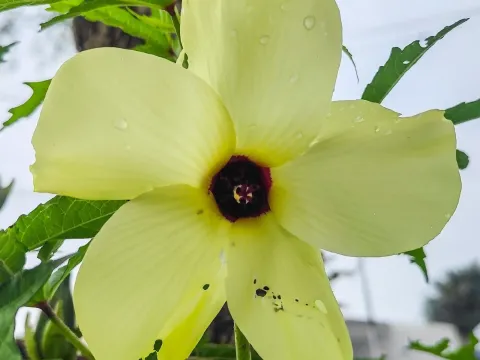
Abelmoschus
Abelmoschus
Abelmoschus, commonly known as okra or ladies' fingers, is a warm-season crop that requires high temperatures for optimal germination and early growth.
What the section contains


Abelmoschus
Seeds should be sown in soil that has reached a temperature of at least 15-20°C; otherwise, germination will be poor, and seeds may rot in the ground.
In temperate climates, it is essential to start seeds indoors in pots 4-6 weeks before the last frost date to ensure a sufficiently long growing season.
The plant is sensitive to root disturbance, so using peat pots or biodegradable containers is recommended to minimize transplant shock during field establishment.
Direct seeding is only viable in regions with a long, hot summer, spacing seeds at least 30 cm apart to allow for the plant's natural vigor and lateral growth.
Abelmoschus is a member of the Malvaceae family and thrives in tropical and subtropical environments, necessitating full sun exposure for at least 6-8 hours daily.
The ideal soil is rich in organic matter, well-draining, and slightly acidic to neutral in pH, as heavy clay soils can lead to root suffocation.
Although the plant exhibits some drought tolerance, consistent moisture is critical for high yields, especially during the flowering and fruit-setting stages.
Fertilizer application should be balanced, as excessive nitrogen may encourage rampant vegetative growth at the expense of fruit production.
Good ventilation is essential in commercial plantations to maintain a dry microclimate around the canopy, which helps prevent foliage diseases.
The yield potential of Abelmoschus is significantly influenced by the ambient temperature; consistent heat promotes rapid development of the fruit capsules.
Average yields under optimal management can reach significant levels, with plants producing fruits continuously until the first cold weather strikes.
Consistent harvesting is the most important factor in maintaining yield, as leaving pods to mature on the plant sends a signal to stop further fruit production.
In well-maintained fields, a single healthy plant can produce dozens of pods throughout the season, provided that the soil fertility is well-managed.
Strategic pruning of lower leaves can improve light penetration and airflow, contributing to higher productivity per square meter in high-density plantings.
Common pests include aphids, whiteflies, and spider mites, which can cause significant damage to leaves and reduce the overall photosynthetic capacity.
Fungal diseases like powdery mildew often occur in humid, stagnant conditions, requiring early detection and cultural control methods to manage effectively.
Root-knot nematodes can be a major issue in sandy soils, often necessitating the use of crop rotation with non-host species to manage population levels.
Integrated Pest Management (IPM) is strongly advised, favoring biological controls and selective application of pesticides to ensure food safety.
Weed control is critical during the first few weeks of growth, as the young seedlings are slow to establish and can easily be outcompeted by fast-growing weeds.
Harvesting usually begins 50 to 65 days after planting, specifically 3-5 days after the flower petals have dropped from the developing fruit.
Pods must be harvested while they are young, tender, and snap easily; once they exceed a certain size, they become fibrous, woody, and unpalatable.
Care should be taken during the harvest, as the plant surfaces often contain small, prickly hairs that can cause skin irritation to farm workers.
The harvested product is highly perishable and should be stored at cool temperatures to maintain its texture and nutritional quality for as long as possible.
Commercial producers often use sharp shears to cut the pods, ensuring a clean wound that heals quickly and minimizes the risk of pathogen entry into the stem.