
Abutilon ramosum
Abutilon ramosum
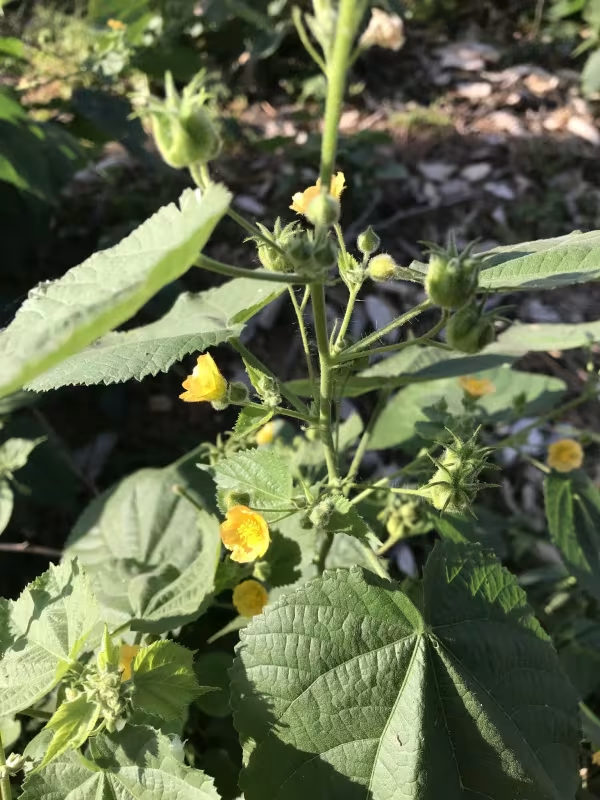
Description
Sowing dates
Abutilon ramosum, belonging to the Malvaceae family, is a heat-demanding crop that requires precise timing for sowing to ensure successful establishment. Direct seeding in open fields should only commence once the soil temperature consistently reaches at least 15-18 degrees Celsius.
In temperate climates, the ideal window for sowing occurs in late spring, typically from late May to early June, once the threat of late frost has completely passed. Utilizing transplants raised in controlled environments can significantly extend the growing season and increase potential biomass.
Seeds of this species benefit significantly from scarification, which softens the seed coat and promotes faster, more uniform germination. The recommended row spacing is 50-60 centimeters, allowing the plant to develop its naturally branching structure without excessive competition for resources.
Sowing depth is critical for successful emergence; it should be kept shallow, between 1 to 2 centimeters, depending on the soil texture. On lighter sandy soils, slightly deeper sowing is permissible, but heavy soils necessitate a minimal cover to prevent stifling the emerging sprouts.
Adequate soil moisture must be maintained during the germination period to ensure success. If rainfall is insufficient, irrigation through light overhead sprinkling is recommended to prevent the surface soil from crusting or drying out, which would otherwise hinder the sensitive seedlings.
Growing requirements
Abutilon ramosum thrives under high light intensity and requires a warm climate to achieve its full potential. The optimum temperature range for vegetative growth is between 22 and 28 degrees Celsius, with growth rates dropping significantly if temperatures fall below 15 degrees for extended periods.
The plant performs best in well-structured, fertile, and well-drained loamy soils with a neutral pH, ranging from 6.5 to 7.2. Waterlogged or poorly aerated soil conditions can lead to severe root damage and stunted growth, making site selection a vital part of the planning process.
Good soil preparation, including deep plowing and the incorporation of organic amendments, provides the necessary foundation for high-quality fiber development. Regular inter-row cultivation is essential to control weeds and improve oxygenation, especially during the plant's early developmental stages.
The species is sensitive to strong, drying winds which can damage its expansive leaf surface. Planting in sheltered areas or using windbreaks is recommended for areas prone to high wind speeds to protect the structural integrity of the main stems and branches.
Nutrient management focuses on balanced nitrogen, phosphorus, and potassium applications. Nitrogen is particularly crucial during the rapid vegetative growth phase, while potassium helps improve the overall plant resilience against various environmental stressors and promotes stem strength.
Main diseases and pests
Fungal pathogens represent the most common threat to Abutilon ramosum, particularly root rots such as Rhizoctonia and Fusarium. These diseases are most prevalent in soils with poor drainage or during prolonged periods of excessive rainfall, necessitating strict water management practices.
Pests such as aphids and spider mites frequently infest the foliage, sucking vital sap and significantly reducing the plant's photosynthetic capacity. Early detection and the use of targeted systemic insecticides or horticultural oils can help manage these infestations effectively.
Whiteflies are another major concern, especially in dense plantings, as they weaken the plant and serve as vectors for various viral diseases. Consistent monitoring for signs of infestation and ensuring proper plant spacing are crucial components of an effective integrated pest management strategy.
Powdery mildew is a common late-season disease that affects leaves under humid conditions with poor air circulation. While it rarely kills the plant, it significantly reduces fiber quality and biomass production, making preventative measures like thinning and spacing vital for healthy crops.
Managing threats requires a comprehensive approach, combining careful crop rotation to break pathogen cycles, the use of certified disease-free seeds, and timely intervention with appropriate control agents. Balancing chemical use with cultural practices remains the key to sustainable yield success.