
Abutilon auritum
Abutilon auritum
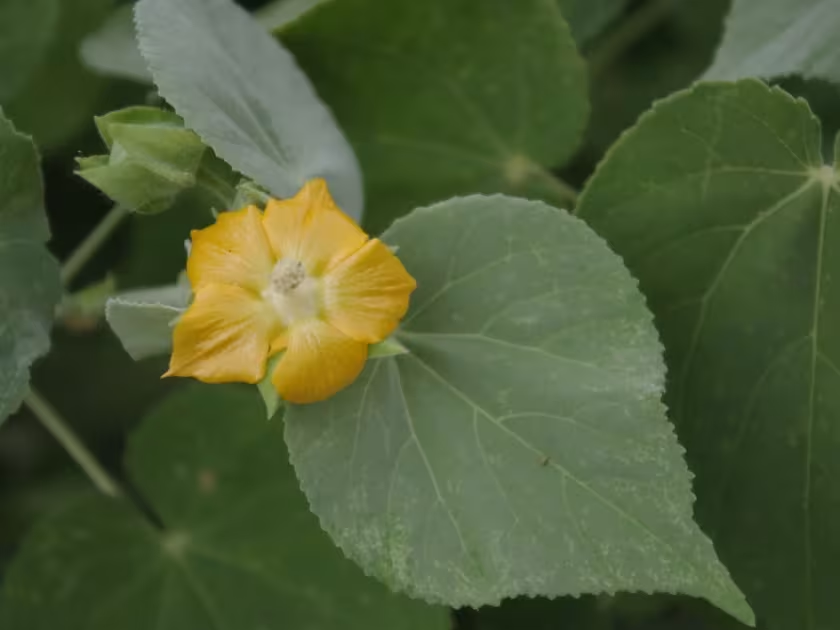
Description
Sowing dates
The sowing of Abutilon auritum is performed by utilizing viable seeds that are planted in well-prepared, loose soil during the onset of the warm season.
Seed treatment, such as brief soaking, is recommended to improve the germination rate, as the seed coat can be quite resilient in certain environmental conditions.
Seeds should be placed at a depth of 1-2 centimeters in rows, ensuring that the distance between individual plants allows for adequate air circulation and light penetration.
Early-stage management involves careful weeding to prevent competition from invasive grasses, which can quickly outgrow the young Abutilon seedlings.
Consistent soil moisture levels immediately after sowing are crucial to ensure successful stand establishment and uniform growth across the field.
Growing requirements
Abutilon auritum, a member of the Malvaceae family, thrives in tropical and subtropical environments, requiring high solar radiation for optimal photosynthetic activity.
The crop prefers fertile, well-draining soils with a near-neutral pH; heavy clay soils should be amended with organic matter to improve aeration.
Temperature management is vital; the plant is not cold-hardy and requires a frost-free environment to maintain its structural integrity and biomass production.
While the plant shows some resilience to transient water stress once established, regular irrigation during dry spells significantly boosts the yield of fiber-rich stems.
Periodic fertilization with nitrogen-based compounds helps support the rapid vegetative growth that defines the developmental cycle of this species.
Main diseases and pests
Spider mites and whiteflies are the most significant pests affecting Abutilon crops, particularly in greenhouses or during periods of prolonged drought.
Fungal infections, such as powdery mildew, may manifest if humidity levels remain excessively high and airflow through the canopy is restricted.
Root rot is a major threat in fields with poor drainage, as saturated soil conditions quickly weaken the root system and inhibit nutrient uptake.
Integrated pest management strategies should be applied to maintain plant health, focusing on early detection and the use of environmentally safe biological controls.
Maintaining proper spacing between rows and keeping the area free of plant debris are effective measures to reduce the prevalence of both pests and diseases.