
Abutilon longicuspe
Abutilon longicuspe
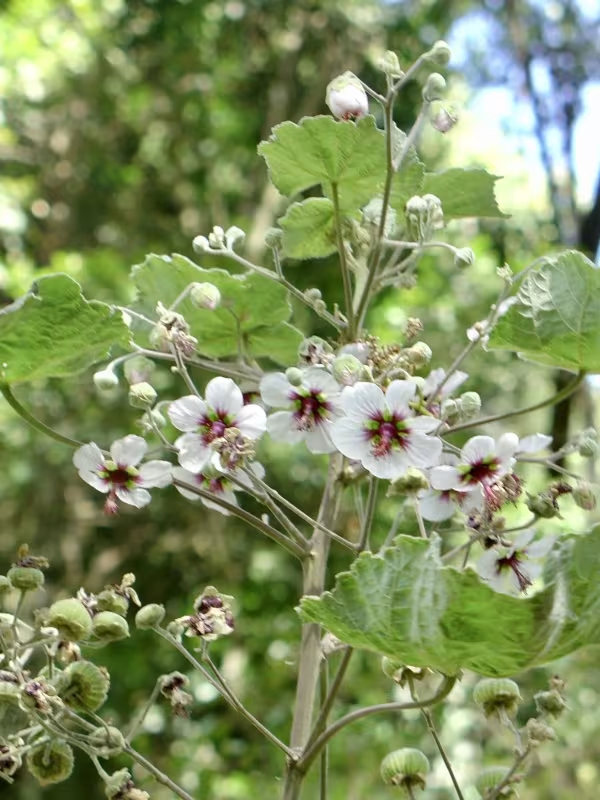
Description
Sowing dates
Abutilon longicuspe is a thermophilic crop that requires stable soil temperatures of at least 18°C for successful seed germination.
In regions with shorter growing seasons, starting plants indoors as seedlings is highly recommended to ensure the plant reaches maturity.
The optimal sowing time is late spring, once the threat of frost has completely passed and the soil has sufficiently warmed up.
Seeds should be sown at a shallow depth of 2 to 3 cm, ensuring they are pressed firmly into moist, nutrient-rich soil to maximize germination rates.
Strategic row spacing, typically between 60 and 75 cm, is essential to allow for mechanical weeding and proper air circulation among the plants.
Growing requirements
As a member of the Malvaceae family, this crop thrives in deep, well-draining loam soils that possess a neutral or slightly acidic pH level.
Abutilon longicuspe requires full sun exposure; any significant shading will lead to weak, spindly stems and lower overall fiber production quality.
Regular irrigation is necessary during the rapid vegetative growth phase, though soil must be managed to prevent waterlogging which stresses the root system.
Balanced fertilization, with an emphasis on nitrogen in early stages, supports the vertical growth required for high-quality bast fiber extraction.
Protecting the crop from strong winds is advisable in early development, as the young stems can be delicate and prone to mechanical damage.
Yield
The yield of this crop is primarily determined by the total accumulation of biomass and the diameter of the harvested stems.
High-density planting, when managed correctly, can lead to significant yields, provided that nutrient uptake is not inhibited by overcrowding.
Proper weed control throughout the season ensures that nutrients are fully utilized by the crop rather than by competing vegetation.
Under optimal management conditions, the fiber recovery rate from the dry stem biomass remains highly competitive with other traditional bast crops.
Maximizing yield potential requires consistent soil monitoring and responsive fertilization schedules tailored to the plant's growth stage.
Main diseases and pests
Fungal pathogens such as mildew and root rot represent the primary biological threats, often exacerbated by high humidity and poor airflow.
Pests like aphids and spider mites are frequent nuisances that target young leaves, potentially stunting growth if left untreated.
Implementing a strict crop rotation schedule helps reduce the accumulation of soil-borne pathogens and keeps common pests at bay.
Integrated pest management strategies are preferred to maintain the quality of the raw material intended for industrial fiber processing.
- Regular inspection of the lower leaf surfaces for signs of mite infestation.
- Application of prophylactic treatments in humid weather conditions.
- Maintenance of clear field margins to prevent pest migration.
Harvesting
Harvesting is typically timed for the physiological stage when the lower leaves begin to senesce and fiber content is at its peak.
Mechanized harvesting utilizes specialized equipment to cut the stalks at ground level, ensuring consistent stem length for processing.
Post-harvest handling involves bundling and drying the stalks to reduce moisture content and prevent microbial degradation before storage.
Efficient timing is crucial, as delayed harvesting can lead to excessive lignification of the stems, making the fiber more brittle and difficult to process.
After reaching the target moisture level, the raw material is bundled and transported to facilities for mechanical or chemical fiber extraction.