
Abutilon berlandieri
Abutilon berlandieri
Description
Growing requirements
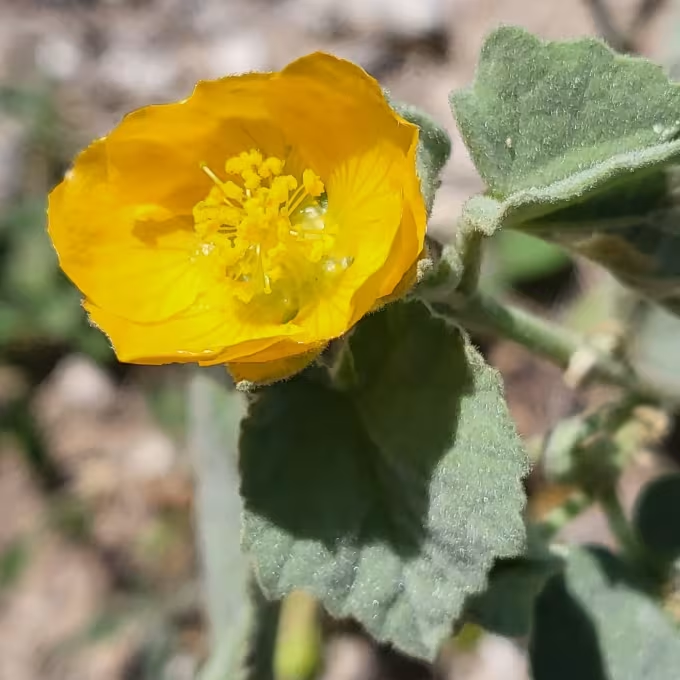
Abutilon berlandieri, commonly known as Berlandier's Indian mallow, is a perennial shrub native to the arid regions of North America, specifically Texas and Mexico. It belongs to the Malvaceae family, which is known for its diverse and resilient species.
This plant thrives in well-drained, sandy, or rocky soils, characteristic of its natural habitat in open plains and scrublands. It is highly adapted to environments with limited water availability.
Temperature management is vital; while the plant is drought-tolerant, it lacks frost resistance. It is best grown in containers in cooler climates to allow for relocation during winter months.
Optimal growth is achieved with full sun exposure, which ensures the development of strong branches and abundant flowering. Partial shade is generally discouraged as it may lead to leggy, weak stems.
Agronomic maintenance includes light watering cycles, allowing the soil to dry out between sessions to prevent root rot. Supplemental feeding with balanced fertilizers during the growing season supports healthy development.
Main diseases and pests
Pests such as aphids and spider mites are the most common adversaries, particularly in indoor environments where air humidity is consistently low.
Root rot remains the most significant disease threat, typically caused by overwatering or inadequate soil aeration in potted specimens.
Powdery mildew is a fungal issue that can emerge under conditions of poor airflow or high humidity fluctuations within the cultivation area.
Whiteflies can infest the undersides of leaves, requiring immediate integrated pest management strategies to prevent plant debilitation.
Proper sanitation practices, including the removal of dead foliage and maintaining adequate spacing between plants, significantly reduce the risk of outbreaks.