
Palmer's abutilon
Abutilon palmeri
Description
Growing requirements
Palmer's abutilon (Abutilon palmeri) is an evergreen shrub belonging to the Malvaceae family. This species is native to the desert regions of the Southwestern United States and Northwestern Mexico.
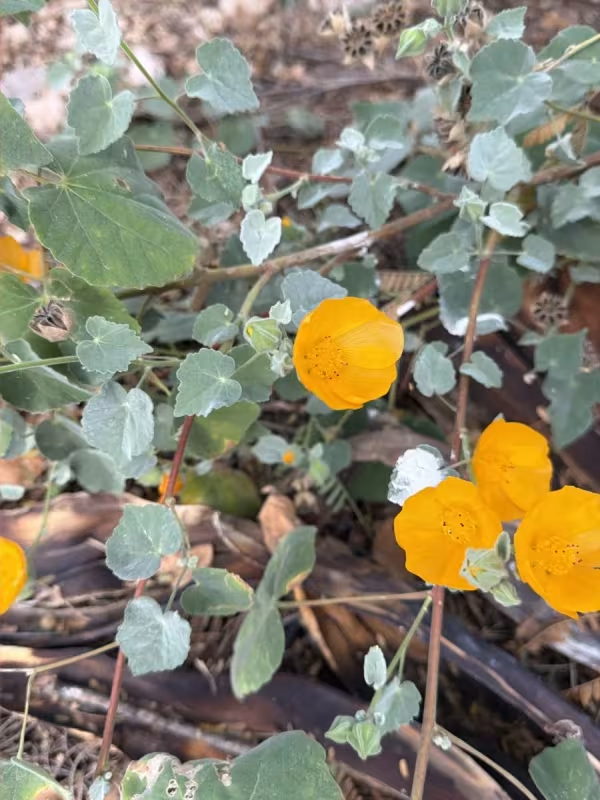
The plant features heart-shaped leaves characteristic of the family, covered with dense, velvety pubescence that gives them a silvery-gray appearance. The flowers are bell-shaped, bright yellow, and appear on the shrub throughout the warm growing season.
This crop has high light requirements and prefers open, well-lit areas. It is well-adapted to extremely high temperatures and is characterized by a high degree of drought tolerance.
Soil preferences include well-drained, sandy, or rocky substrates. The plant does not tolerate waterlogging in the root zone, making high-quality drainage a critical requirement to prevent root rot.
In terms of use, Abutilon palmeri is primarily utilized in landscape design as a drought-tolerant element of xeriscaping. Its ornamental qualities and ability to withstand water scarcity make it a promising choice for landscaping arid regions.
Main diseases and pests
The main threats to this crop are excessive humidity in both the air and soil. Improper irrigation can lead to susceptibility to phytophthora and various types of root rot.
Among pests, spider mites and whiteflies pose the greatest danger, as they multiply rapidly in conditions of low air humidity and high temperatures typical of the plant's natural habitat.
To control insect pests, it is recommended to use systemic insecticides or biological control agents; however, maintaining an optimal temperature and ventilation remains the best preventive measure.
It is important to monitor the condition of the leaf surface, as the excessive accumulation of dust on the pubescent leaves can contribute to the development of fungal diseases during periods of sparse rainfall.
Proper pruning of the shrub after the flowering period helps rejuvenate the plant and improves airflow through the canopy, which significantly reduces the risk of disease outbreaks.