
Desert Indian Mallow
Abutilon malacum
Description
Growing requirements
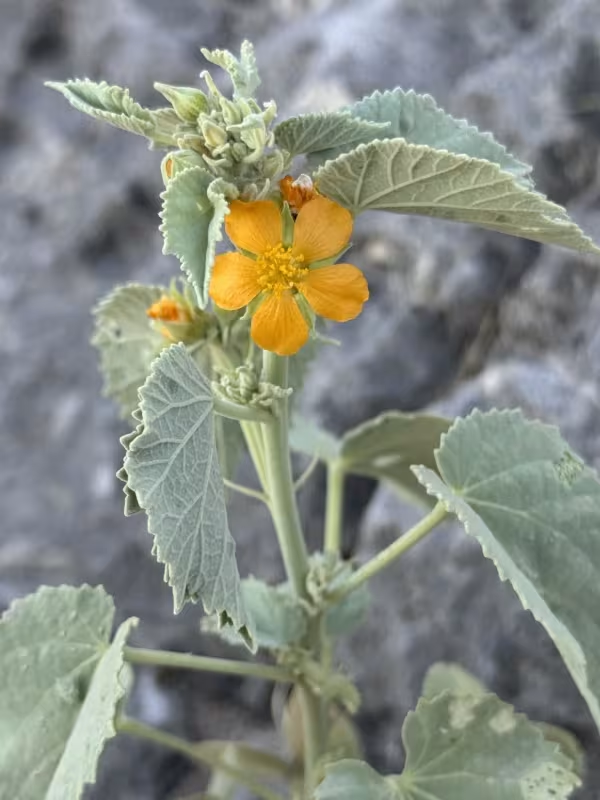
Desert Indian Mallow (Abutilon malacum) is a resilient perennial shrub belonging to the Malvaceae family. Native to arid regions of the southwestern United States and Mexico, it is biologically adapted to harsh, dry environments.
The crop thrives in well-drained, sandy, or gravelly soils. Proper soil aeration is the most critical factor for successful cultivation, as the roots are highly susceptible to decay in waterlogged conditions.
Climatic requirements are centered around full sun exposure and high heat. The plant is drought-tolerant, utilizing its distinct soft pubescence to minimize transpirational water loss.
In terms of agricultural management, irrigation should be carefully controlled to prevent excessive moisture levels near the base of the plant, which often leads to poor development.
The morphology of the plant includes fine, velvety hairs covering the stems and foliage, which serve as an evolutionary adaptation to preserve moisture in extreme desert climates.
Main diseases and pests
Common pests affecting this species include spider mites and aphids, which tend to congregate on the undersides of the leaves, particularly during periods of environmental stress.
Root rot, caused by fungal pathogens such as Phytophthora or Pythium, represents the most significant threat to the survival of the plant when soil drainage is compromised.
Whiteflies can also cause damage by feeding on plant sap, which reduces overall vigor and potentially introduces secondary viral infections to the crop.
Maintaining proper spacing between individual plants is essential to improve airflow, which significantly reduces the risk of fungal outbreaks in humid weather conditions.
Integrated pest management strategies are recommended, focusing on early detection and maintaining plant health to prevent the need for heavy chemical intervention.