
Abutilon trisulcatum
Abutilon trisulcatum
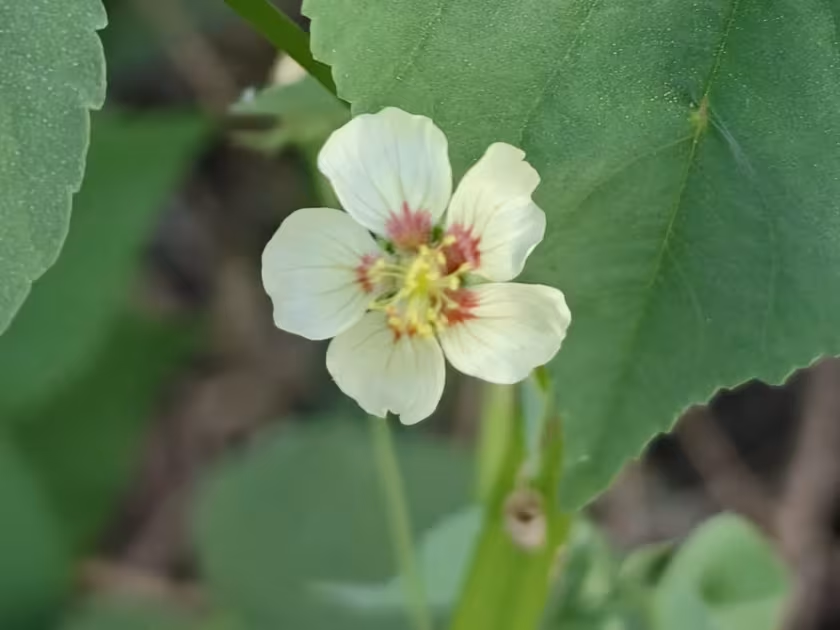
Description
Sowing dates
Abutilon trisulcatum belongs to the Malvaceae family. In its natural habitat, it grows as a perennial subshrub, though in agricultural practice it can be managed as an annual crop in temperate regions.
The sowing period begins when the soil warms up to at least 15–18 degrees Celsius. Providing a stable temperature regime is critical for successful seed germination and the establishment of a primary root system.
Sowing is carried out using row planting, with spacing determined by the intended use of the crop, such as green mass or fiber production. The optimal sowing depth is 2–3 centimeters, depending on the soil structure and moisture levels.
During the early growth stage, the crop requires weed control, as competition from weeds can inhibit the growth of young seedlings. Adhering to recommended seeding rates is essential to prevent overcrowding, which leads to nutrient competition.
The plant demonstrates moderate initial growth rates, accelerating during the active leaf formation phase. Optimal sowing timing allows the crop to maximize solar radiation for intense photosynthesis throughout the vegetative season.
Growing requirements
Abutilon trisulcatum prefers well-drained, fertile soils with a neutral or slightly alkaline pH. The crop is highly sensitive to waterlogging, which can easily cause root rot and systemic plant failure.
Optimal climatic conditions for this plant include a warm and moderately humid environment. Once a mature root system is established, Abutilon displays significant tolerance to drought periods.
For proper development, the plant requires high levels of sun exposure. Shading reduces the fiber yield and total biomass, so the selection of fields should focus on well-lit southern or southeastern slopes.
Mineral nutrition requirements include the application of balanced nitrogen-phosphorus fertilizers during the active vegetative growth phase. Excessive nitrogen can lead to overdeveloped foliage at the expense of fiber quality.
Agricultural management also includes regular inter-row cultivation to improve soil aeration and moisture retention. This is particularly important in heavy loamy soils that are prone to forming a surface crust.
Main diseases and pests
Common pests affecting Abutilon include spider mites and aphids, which attack young leaves and shoots under hot, dry conditions. Preventive spraying with bio-insecticides is recommended to maintain plant health.
Diseases linked to high humidity include various types of root rot and Fusarium wilt. The primary prevention strategy involves strict adherence to irrigation schedules and avoiding soil water saturation.
Powdery mildew may affect the foliage during periods of fluctuating temperatures and high atmospheric humidity. Sulfur-based fungicides are recommended to control the spread of fungal spores.
In some regions, caterpillar damage from Lepidoptera species feeding on vegetative mass can be an issue. Early monitoring of pest populations allows for effective control without the need for heavy chemical applications.
Crop rotation is mandatory to prevent the buildup of specific soil-borne pathogens. It is advised not to plant Abutilon in fields previously occupied by other Malvaceae family members.