
Hoary Abutilon
Abutilon incanum
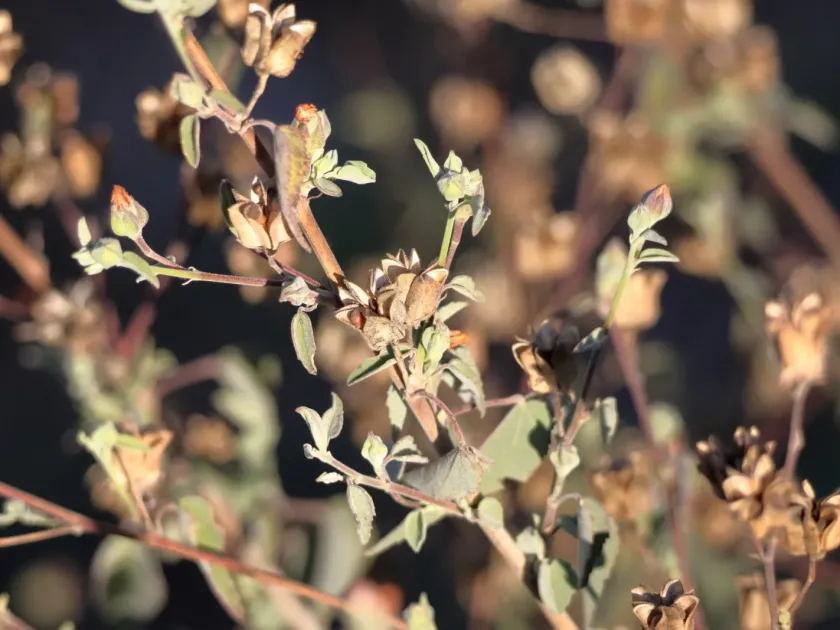
Description
Sowing dates
Sowing Hoary Abutilon is best conducted in late spring once soil temperatures have consistently risen. The seeds require warmth and light to germinate effectively, so a shallow planting depth is strictly recommended for success.
The seeds should be sown in well-drained, porous soil to prevent moisture accumulation around the seed coat. Pre-soaking seeds for several hours can significantly accelerate the emergence of seedlings in controlled agricultural settings.
Spacing is essential for this species, as it develops a substantial bush structure. Maintaining a distance of at least 40 centimeters between plants ensures sufficient airflow, which is critical for preventing fungal diseases in the foliage.
In regions with shorter growing seasons, starting seedlings in greenhouse trays before transplanting is a viable strategy. This allows for better control of initial growth stages and protects the young plants from extreme environmental conditions.
Once established, the seedlings exhibit rapid development. Providing consistent but moderate irrigation during the first few weeks is the only phase where intensive care is required to support the root system expansion.
Growing requirements
Hoary Abutilon belongs to the Malvaceae family and is native to arid environments across the Americas. Its evolutionary history has endowed it with remarkable drought tolerance and an ability to thrive in poor, rocky soils.
The plant thrives in full sun exposure, which is necessary for the development of its distinctive greyish pubescence. This specialized foliage is a key adaptation that reflects heat and reduces water loss through transpiration.
Soil requirements are relatively modest; the species prefers sandy or gravelly loam with excellent drainage. It does not tolerate heavy, clay-rich soils that retain moisture for long periods, as these conditions lead to root rot.
Temperature range for optimal growth is between 20 and 32 degrees Celsius. It can withstand intense heatwaves that would cause many other agricultural crops to wither, making it a robust candidate for xeriscaping.
Nutrient requirements are low, and the plant rarely needs heavy fertilization. Over-fertilization can actually be detrimental, promoting excessive succulent growth that becomes prone to pest infestation and structural weakness.
Main diseases and pests
The main threats to Abutilon incanum are pathogens associated with excessive soil moisture. Root rot caused by oomycetes can be devastating if the drainage system of the field fails during the rainy season.
Pests such as spider mites and aphids are common in hot, dry conditions. These insects target the undersides of the leaves, drawing sap and weakening the plant, which may lead to stunted growth or premature leaf drop.
Integrated pest management is the most effective approach to control these issues. Promoting local predator populations, such as ladybugs, helps maintain aphid numbers below the economic injury level without chemicals.
Occasional outbreaks of powdery mildew can occur if air circulation is restricted. Pruning the lower branches and ensuring the plants are not overcrowded are the best preventative measures against this fungal disease.
Maintaining field hygiene by removing debris and weeds prevents the buildup of harmful pathogen spores. Regular monitoring allows for early detection of potential threats, ensuring the overall longevity of the crop.