
Abutilon graveolens
Abutilon graveolens
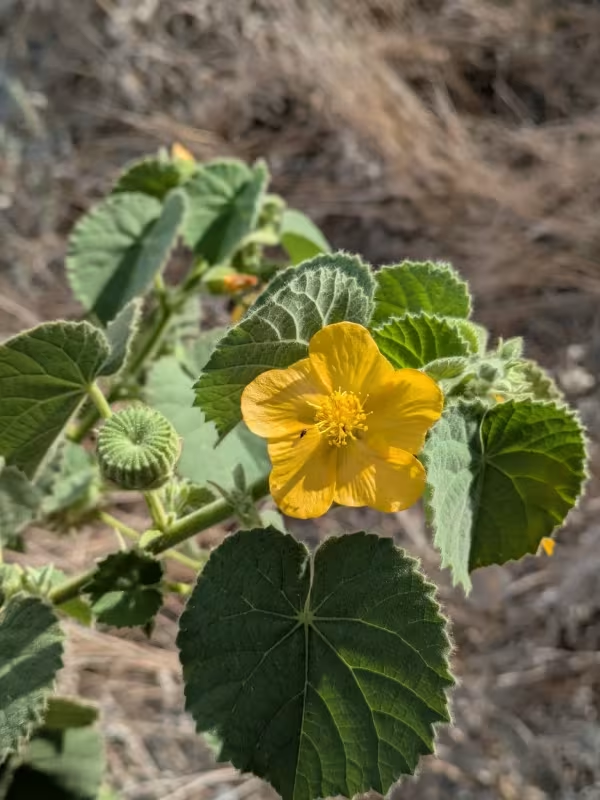
Description
Sowing dates
Abutilon graveolens is a thermophilic species, requiring the soil to be thoroughly warmed to at least 15–18 degrees Celsius before any sowing operations begin.
The optimal planting time in temperate regions is late May, once the risk of spring frost, which can severely damage young seedlings, has completely passed.
Seeds should be sown at a depth of 1.5 to 3 centimeters, depending on the soil texture, to ensure uniform emergence and proper root development.
Row spacing is typically maintained between 45 and 60 centimeters, providing sufficient space for plants to grow and allowing for mechanical weeding.
Pre-soaking the seeds before planting is a recommended agronomic practice to enhance germination rates and ensure a more consistent crop stand.
Growing requirements
Belonging to the Malvaceae family, this plant thrives in direct sunlight and requires high light intensity throughout the day to reach full maturity.
The ideal soil conditions include fertile, well-draining loam or sandy loam with a neutral to slightly acidic pH, as waterlogging is detrimental to growth.
Consistent moisture is necessary during the active growth phase, yet the plant is highly sensitive to stagnant water, which can trigger root diseases.
Abutilon graveolens prefers ambient temperatures between 22 and 28 degrees Celsius; growth significantly slows down if temperatures drop below 10 degrees.
Regular cultivation between rows is essential to break the soil crust, improve aeration, and promote vigorous growth of the main taproot system.
Yield
The yield potential of Abutilon graveolens is strongly correlated with the level of soil fertility and the application of fertilizers during the growing season.
As a fiber-producing crop, it forms sturdy stems that are harvested before the fiber quality degrades due to excessive lignification as the plant matures.
The biomass yield per hectare depends on planting density, irrigation management, and the overall health of the crop throughout the summer months.
Seed yield varies depending on pollinator activity and the duration of the warm season, which determines the successful maturation of the capsules.
Proper management of nutrient inputs, particularly nitrogen, is crucial to maximize the vegetative growth required for high-quality fiber extraction.
Main diseases and pests
Common agricultural pests affecting this crop include spider mites and aphids, which often thrive in hot, dry conditions and can stunt young foliage.
Fungal issues, such as powdery mildew, may occur if there is poor air circulation or excessive humidity within the field, requiring careful monitoring.
Nematodes can be a significant threat if the crop is grown in the same plot for multiple seasons, necessitating strict adherence to crop rotation practices.
Integrated pest management strategies, including the use of resistant varieties and targeted biological control, are recommended to protect the harvest.
Good field hygiene, such as removing weeds and crop residues, is vital to prevent the buildup of pathogens and ensure long-term crop sustainability.
Harvesting
Fiber harvesting typically begins at the early flowering stage to ensure the best balance between stem length and the quality of the internal fibers.
The harvest process involves cutting the plants and subjecting them to specialized extraction methods to separate the fibers from the woody core.
If the objective is seed production, harvest is delayed until the capsules turn brown and dry, indicating that the seeds have reached full maturity.
Post-harvest, the raw material must be thoroughly dried in well-ventilated conditions to prevent moisture accumulation and mold growth in storage.
Proper storage temperatures and low humidity levels are required to maintain the viability of seeds and the integrity of extracted fibers for industrial use.