
Indian mallow
Abutilon hirtum
Description
Growing requirements
Indian mallow (Abutilon hirtum) is a perennial shrub belonging to the Malvaceae family. It is recognized for its potential as a fiber crop, with stems containing bast fibers suitable for various industrial applications.
The plant originates from tropical regions of Africa and Asia. It has adapted to various habitats, ranging from disturbed ground to agricultural margins, thriving in warm and humid environments across the tropics.
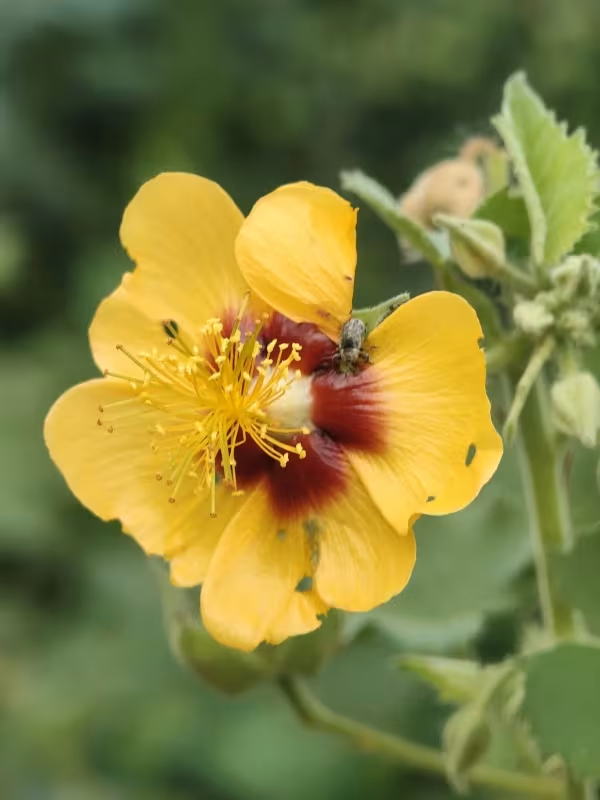
Botanically, Abutilon hirtum is distinguished by its pubescent stems and leaves, covered in fine, soft hairs. The plant typically reaches a moderate height, featuring palmately lobed leaves and characteristic cup-shaped flowers.
The climate requirements for this species are strictly tropical. It needs consistent warmth and full sun exposure to optimize biomass production. Temperatures dropping below 15°C can negatively impact the fiber maturation process.
Regarding soil conditions, it prefers fertile, loamy soils with excellent drainage properties. While it can tolerate various soil types, the highest quality yields are achieved in soils rich in organic matter and nutrients.
Main diseases and pests
The crop is susceptible to several common pests within the Malvaceae group, including spider mites. These pests thrive in hot, dry conditions and can cause significant damage to the plant's foliage if not monitored.
Aphids are another major concern, particularly during the early vegetative stages. They feed on plant sap, which can weaken the crop and create favorable conditions for secondary mold infections.
Fungal diseases, such as leaf spot and mildew, often emerge when plant density is too high or airflow is restricted. Proper spacing between rows is essential to ensure adequate ventilation and disease prevention.
Root rot is a critical threat that develops in waterlogged soil. Implementing a structured irrigation schedule and ensuring the ground is well-draining significantly reduces the risk of soil-borne diseases.
Management strategies include integrated pest management (IPM) practices, such as biological control agents and resistant variety selection. Regular field scouting is vital for the early detection of any physiological or pathological stress.