
Abutilon hybrid
Abutilon hybrids
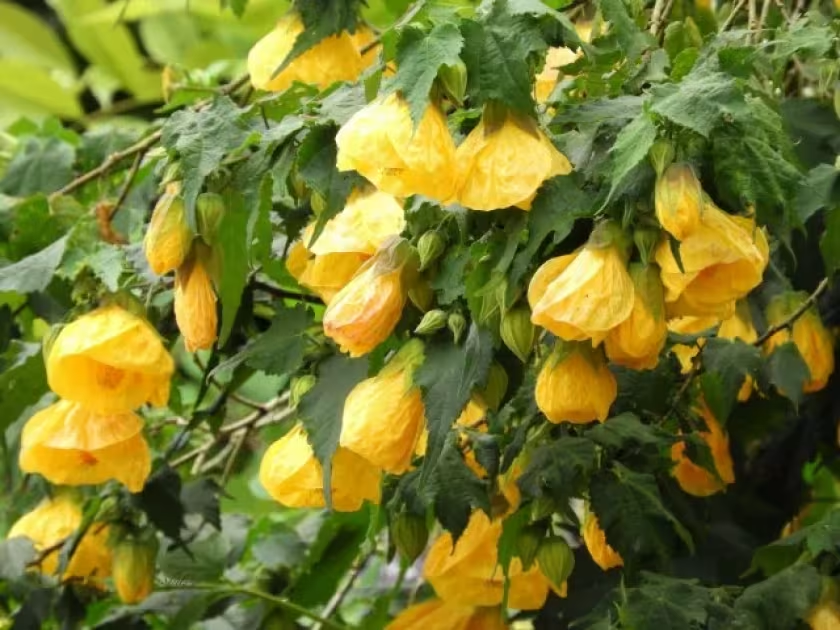
Description
Sowing dates
The propagation of Abutilon hybrid is primarily achieved through seeds or stem cuttings. Seed sowing is typically performed in late winter or early spring, around February or March, to ensure the plants are well-established by the summer season.
For successful germination, seeds require a stable temperature between 20 and 25 degrees Celsius. A light, well-draining, and nutrient-rich potting mix should be used and sterilized beforehand to prevent soil-borne diseases.
Seeds should be sown at a shallow depth, approximately 0.5 cm, and covered with a plastic lid or film to maintain high humidity. Daily ventilation is essential to provide fresh air and prevent the damping-off of seedlings.
Once the first true leaves emerge, the seedlings are transplanted into individual pots. Due to the rapid growth rate of the hybrid, early repotting provides the necessary space for the root system to expand properly.
Cuttings are usually taken during the summer months using semi-hardwood stems. This method is preferred when propagating specific cultivars to ensure that the offspring inherit the exact characteristics of the parent plant.
Growing requirements
Abutilon hybrid belongs to the Malvaceae family and is a result of complex hybridization between various tropical species native to South America. It is widely cultivated for its ornamental, bell-shaped flowers.
The plant thrives in bright, indirect light. While it loves sunshine, direct mid-day sun can lead to leaf scorch, so placement near east or west-facing windows is highly recommended for optimal results.
A fertile, neutral, or slightly acidic potting medium is ideal for healthy growth. A significant layer of drainage material at the bottom of the container is necessary to prevent waterlogging and root rot.
During the active growing season, consistent moisture is required, allowing the surface of the soil to dry out slightly between waterings. In winter, growth slows down, and watering should be reduced accordingly.
Regular fertilization with a balanced liquid fertilizer every two weeks promotes vigorous growth and continuous blooming. High-potassium formulas are particularly effective during the flower-bud formation stage.
Main diseases and pests
Spider mites and whiteflies are the most common pests affecting Abutilon hybrids. They thrive in dry conditions and can cause significant damage by feeding on the sap, leading to leaf yellowing and premature shedding.
Effective pest management involves using systemic insecticides or acaricides, complemented by regular misting to increase air humidity. Routine inspections of the leaf undersides are crucial for early detection.
Root rot is a major threat caused primarily by overwatering in poorly drained soil. If root rot occurs, immediate repotting into fresh, airy soil after pruning damaged roots is necessary to save the plant.
Environmental stress, such as sudden drafts or drastic temperature fluctuations, can cause the plant to drop its buds and leaves. Maintaining a stable environment is key to keeping the plant in peak condition.
Powdery mildew may occur if air circulation is inadequate. Control measures include using specialized fungicides and improving the spacing between plants to ensure good airflow throughout the foliage.