
Indian mallow
Abutilon asiaticum
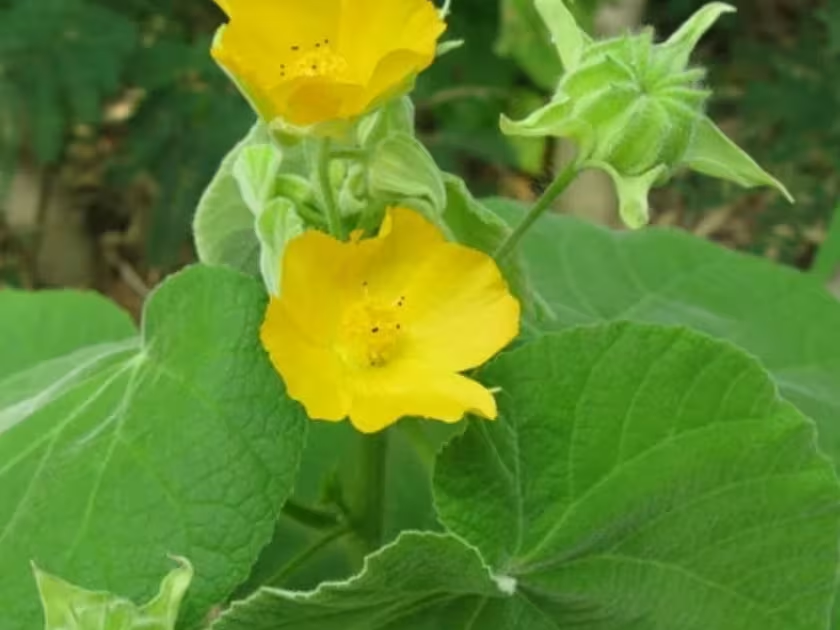
Description
Sowing dates
Abutilon asiaticum is a warm-season crop that requires soil temperatures consistently above 15°C to ensure successful germination and seedling establishment.
Sowing should be timed to avoid any potential frost damage, typically occurring late in the spring when stable warm weather patterns are established.
The seeds are planted at a shallow depth of 2 to 3 cm, as deep planting can severely restrict emergence and seedling vigor in this species.
Optimal plant spacing is crucial, with row spacing designed to prevent overcrowding and to facilitate effective mechanical weeding operations later.
Adequate soil moisture must be maintained during the first two weeks post-sowing to support the rapid development of the root system.
Growing requirements
As a member of the Malvaceae family, this plant is well-adapted to high solar radiation levels, which are essential for its overall growth and development.
The crop thrives in well-drained, fertile soil types, preferring substrates that are rich in organic matter to sustain its rapid biomass accumulation.
Temperature requirements are high, as the plant originates from tropical and subtropical regions, necessitating a long, warm growing season for full maturity.
While the plant exhibits some drought tolerance once fully established, consistent water availability is required during the vegetative phase for maximum yields.
Soil pH levels between 6.0 and 7.5 are considered ideal, ensuring the best availability of macro and micronutrients for the developing plant.
Main diseases and pests
The primary pests affecting Abutilon asiaticum include various aphid species and spider mites, which can cause significant damage to the foliage.
Fungal pathogens such as powdery mildew represent a major threat, particularly in regions with high humidity levels and poor air circulation.
Effective management strategies involve regular scouting of fields to detect early signs of infestation or disease symptoms before they reach economic thresholds.
Integrated pest management, including the use of beneficial insects and selective chemical treatments, is recommended to mitigate the impact of infestations.
To reduce disease pressure, it is essential to follow a strict crop rotation schedule, avoiding consecutive years of planting in the same area.