
Sonnerat's abutilon
Abutilon sonneratianum
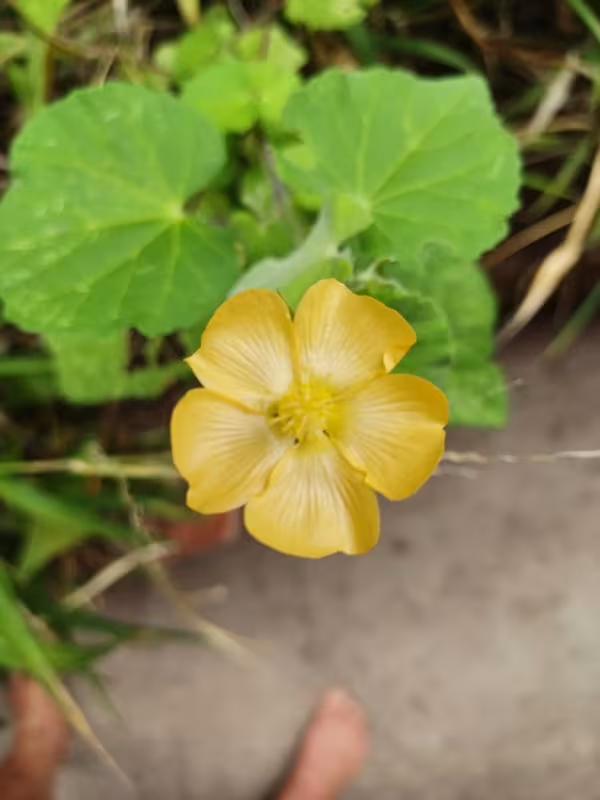
Description
Growing requirements
Sonnerat's abutilon (Abutilon sonneratianum) is a perennial herbaceous plant belonging to the Malvaceae family. Originating from sub-Saharan Africa, this species is valued in specific agricultural contexts for its structural fiber properties found within the stem tissues.
The plant thrives in well-drained, nutrient-rich soils with a neutral pH balance. It requires high levels of solar irradiance for optimal growth, making it particularly suited for cultivation in tropical and warm temperate climatic zones where temperatures remain consistently above 15-20°C.
Proper soil preparation, including deep plowing and the addition of organic matter, is essential for healthy root development. The plant is moderately drought-tolerant once established, but consistent irrigation is necessary for maximum fiber yield.
Agricultural management requires precise timing of sowing when all risks of frost have passed. As a fast-growing species, it needs adequate spacing to prevent excessive humidity and competition for soil nutrients between individual plants.
Its industrial potential lies in the production of natural fibers, which can be utilized in textile manufacturing and for reinforcement in composite materials due to the cellulose content of its bast fibers.
Main diseases and pests
The primary threats to Abutilon sonneratianum include fungal root rot pathogens, which are exacerbated by poorly drained soils or high-humidity environments. These pathogens typically attack the vascular tissue, leading to plant wilting.
Insect pests such as spider mites and various aphid species pose a significant risk, especially during periods of dry weather. They cause chlorosis and leaf drop, which drastically affects the photosynthetic capacity of the plant.
Management of these pests involves a combination of integrated pest management (IPM) strategies. This includes regular field scouting to monitor pest populations and the use of targeted biological controls where possible.
Weed management is critical during the seedling stage, as the plant is slow to establish its canopy. Mechanical weeding or the use of pre-emergent herbicides is recommended to ensure the crop is not overtaken by faster-growing invasive grasses.
To reduce the incidence of diseases, growers should ensure adequate crop rotation, avoiding planting in fields previously occupied by other malvaceous crops that may share similar fungal soil-borne diseases.