
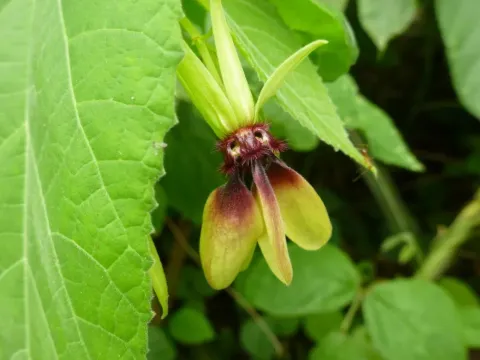
Abroma
Abroma
Abroma, particularly its primary species Abroma augusta, is a heat-loving perennial plant that requires consistently high temperatures for active vegetation. In industrial cultivation, seeds are sown into warmed soil immediately after the rainy season ends or when stable warm weather arrives.
What the section contains

Abroma
Preparation of the seed material includes pre-soaking, which increases germination rates and speeds up plant emergence under field conditions. Sowing is typically done in rows, ensuring sufficient plant density to obtain high-quality, straight stems.
The optimal time for field operations usually falls in the spring in tropical zones, allowing the plant to build up the necessary vegetative mass before the onset of the unfavorable season. Proper calculation of the sowing time is critical to prevent premature flowering.
At the beginning of its life cycle, Abroma requires careful weed control, as young seedlings develop relatively slowly and can be suppressed by more aggressive herbaceous vegetation.
Under optimal conditions, seed germination occurs within 10–14 days, after which the plants begin to intensively form the stem part, which is the main target product for fiber extraction.
Abroma belongs to the Malvaceae family and naturally grows in the tropical regions of Asia and Australia, which determines its high climatic requirements. The plant needs a significant amount of moisture, yet it is extremely sensitive to waterlogging at the root system, preferring well-drained soils.
Fertile loamy or alluvial soils enriched with organic matter are suitable for successful cultivation. Abroma tolerates saline lands and poor sandy substrates poorly, as stem development slows down and fiber quality drops significantly.
The temperature optimum for vegetation ranges from +25 to +32 degrees Celsius. The crop reacts extremely negatively to sudden temperature drops and night frosts, which can completely destroy a plantation.
The plant is photophilous; however, at the initial stage of growth, it can withstand light shading, which is often used in agroforestry systems when intercropping with other tropical trees.
The fertilizer application system should be balanced in nitrogen to stimulate biomass growth, while monitoring potassium and phosphorus levels is necessary to strengthen the stem structure and improve lodging resistance.
The economic value of Abroma lies in the production of high-quality fiber, which in its physical and mechanical properties approaches jute and other valuable bast fiber crops. The stems contain strong fibers that are easily separated from the woody core after appropriate processing.
The primary use is in the textile industry, manufacturing ropes, cords, technical fabrics, and packaging materials. High strength and resistance to rot make Abroma fiber sought after for the production of fishing gear.
In addition to the stems, other parts of the plant containing bioactive substances are of interest. In some regions, Abroma finds application in medicine, where extracts from roots and leaves are used for the therapy of specific ailments.
Fiber yield directly depends on planting density and agronomic care. When all requirements are met, a significant volume of quality raw material can be obtained from one hectare of plantation, suitable for processing in modern facilities.
The economic efficiency of the crop increases when using integrated processing methods that allow for the utilization of not only the fibrous part but also the waste, which can be used in the production of cellulose or fuel briquettes.
Abroma is susceptible to attacks by various insect pests typical for tropical Malvaceae crops. Leaf-eating caterpillars and weevils pose a particular danger, capable of significantly reducing leaf surface area and thus slowing down stem development.
In conditions of high humidity, plants can be affected by fungal diseases, such as powdery mildew or root rot, which occur when drainage is poor. Prevention includes crop rotation and timely fungicide application.
Bacterial infections can also pose a threat, especially when stems are damaged during maintenance. An important aspect of protection is the disinfection of tools used during cutting or general crop management.
To reduce risks, agronomists recommend selecting resistant varieties and monitoring soil condition, avoiding waterlogging. Regular plantation monitoring allows for the detection of pests at early stages, enabling measures to be taken before mass infestation occurs.
Using biological control methods, such as attracting entomophages, is a promising direction that reduces the environmental load during industrial Abroma cultivation.
Harvesting Abroma is the most labor-intensive process, requiring precision in determining maturity. The optimal period for cutting stems is the phase of early mass flowering, when the fiber content in the stems is at its maximum and quality remains at a high level.
Stems are cut as close to the soil surface as possible to maximize the use of the full fiber length. It is important to use sharp-edged tools to avoid splitting or damaging the fiber layer, which negatively affects the grade of the raw material.
After cutting, the stems undergo primary processing, which includes retting in water or the use of mechanical decorticators. Retting allows for a gentle separation of fiber from the wood, maintaining its strength and elasticity.
Subsequent drying of the fiber must be performed in shaded, well-ventilated areas, as prolonged exposure to direct sunlight contributes to fiber degradation and loss of commercial appearance.
Sorting and packaging of raw material are conducted after complete drying when the moisture level of the fiber reaches established quality standards. Proper logistics from the field to the processing plant allow for the preservation of the unique characteristics of this natural material.