
Abutilon glabriflorum
Abutilon glabriflorum
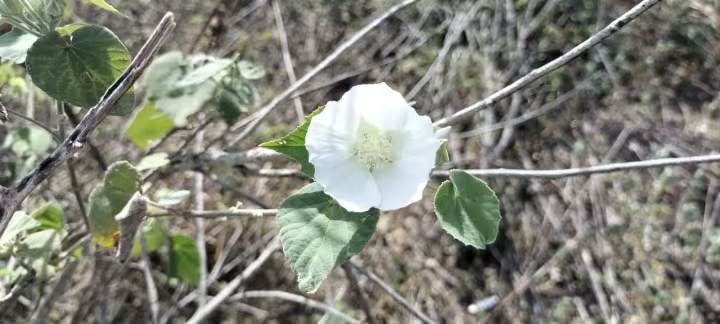
Description
Sowing dates
Abutilon glabriflorum, a member of the Malvaceae family, is recognized for its potential as a source of high-quality bast fiber in agricultural production.
The sowing process begins when soil temperatures consistently reach 12–14 degrees Celsius, ensuring optimal germination conditions for the seeds.
Seeds are typically sown at a depth of 2–3 centimeters, requiring a fine, well-prepared seedbed to promote uniform emergence and development.
Depending on the cultivation strategy, producers use different row spacing patterns to optimize plant density for fiber production efficiency.
Early season weed control is critical during the initial establishment phase, as the young plants are slow to develop and can be easily outcompeted.
Growing requirements
This crop thrives in fertile, well-draining loamy soils that provide a stable moisture supply without the risk of waterlogging, which the plant dislikes.
Abutilon glabriflorum requires full exposure to sunlight and warm conditions, with an optimal growth temperature ranging between 20 and 25 degrees Celsius.
Soil nutrient management should focus on balanced NPK applications, with an emphasis on nitrogen during the vegetative growth stage to maximize biomass.
Adequate soil aeration is essential for root health, as compacted soils significantly restrict the growth of the taproot and decrease total yield.
While the plant is somewhat drought-tolerant, supplemental irrigation during peak growth periods greatly enhances the quality and strength of the fiber.
Main diseases and pests
Common agricultural pests affecting Abutilon species include aphids and spider mites, which can cause significant stress if left unmanaged.
Fungal diseases, particularly those affecting the roots such as Fusarium, represent a threat in poorly drained soils or under high humidity conditions.
Implementing a strict crop rotation cycle is the most effective biological strategy to prevent the buildup of soil-borne pathogens and pests.
Integrated pest management protocols, including the use of entomophages and biological fungicides, are recommended for sustainable crop protection.
Frequent field scouting allows farmers to identify early symptoms of disease or pest infestation, enabling timely intervention before widespread damage occurs.
Harvesting
Harvesting for fiber is optimally timed at the onset of flowering, as this period offers the best balance between fiber yield and textile quality.
The stems are mown as close to the ground as possible using specialized harvesting equipment to capture the maximum usable length of the plant.
Field retting is often employed, where the cut stems remain in the field for a specific period to allow for the natural degradation of pectin.
Timing is crucial; delaying the harvest beyond the flower maturation stage results in thicker, more lignified fibers that are less desirable for processing.
After the harvest, proper drying and storage of the bast material are necessary to prevent microbial growth and maintain fiber integrity during storage.