
Abutilon angulatum
Abutilon angulatum
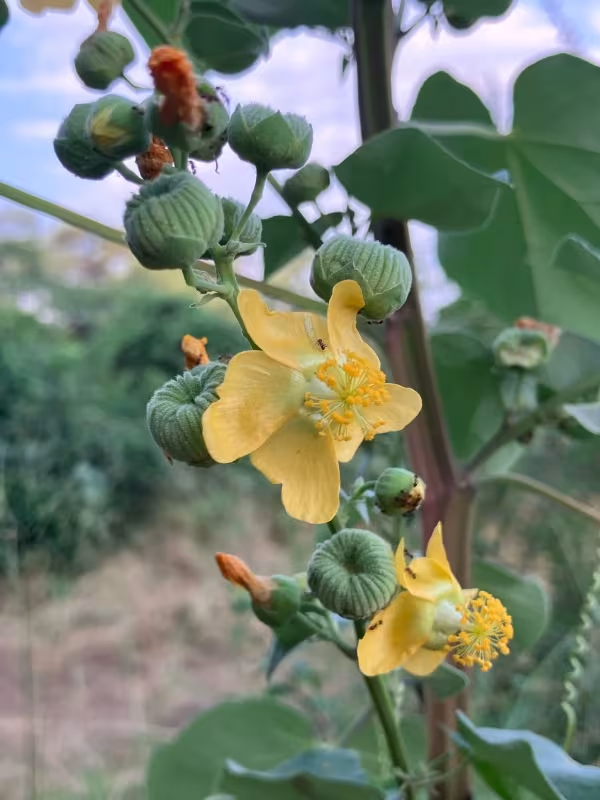
Description
Sowing dates
Abutilon angulatum is a heat-loving crop that requires stable, warm conditions for successful germination. Sowing should only occur once the risk of frost has passed and soil temperatures have consistently reached at least 20 degrees Celsius.
Seeds are typically sown in rows to facilitate mechanical maintenance and ensure adequate spacing between plants. The sowing depth should be carefully controlled, generally kept between 2 to 3 centimeters to ensure uniform seedling emergence.
Preparing a fine, weed-free seedbed is essential for this crop. Soil compaction should be avoided, and the use of a roller after sowing can help ensure better seed-to-soil contact and improve moisture retention for sprouting.
In regions with shorter growing seasons, starting seeds in greenhouses is a viable strategy. Transplanting healthy seedlings to the open field once the weather is stable helps in achieving a more uniform crop stand.
Sowing schedules should be aligned with local weather patterns. Early sowing in cold soil can lead to delayed emergence and increased susceptibility to soil-borne pathogens, whereas late sowing might shorten the fiber accumulation period.
Growing requirements
Belonging to the Malvaceae family and originating from tropical Africa, Abutilon angulatum thrives in sunny, well-lit environments. It requires significant light exposure to fuel the rapid vegetative growth necessary for high fiber production.
The crop performs best in fertile, well-drained soils with a neutral pH. Waterlogging must be avoided at all costs, as the plant is highly sensitive to root asphyxiation, which can quickly lead to plant mortality.
Regular irrigation is vital during periods of active growth, particularly in dry climates. While the plant shows some drought tolerance once established, consistent moisture levels are key to producing long, high-quality textile fibers.
Nutrient management involves applying balanced fertilizers, with an emphasis on nitrogen to encourage stem elongation and stem diameter. Potassium and phosphorus are also important for building structural integrity within the stems.
Adequate spacing is required to ensure good air circulation, which helps reduce the risk of humidity-related fungal issues. Overcrowding can lead to weaker, thinner stems and lower overall fiber quality at harvest time.
Main diseases and pests
Fungal pathogens represent the most significant threat to Abutilon angulatum, particularly in environments with high humidity or poor air movement. Proper sanitation and spacing are the best preventive measures.
Insects such as aphids and spider mites can attack the foliage, hindering the plant's ability to photosynthesize efficiently. Regular scouting is essential to identify infestations early before they reach critical levels.
Weed management is most critical in the first few weeks of the growth cycle. Since the plant starts its development slowly, it can be easily outcompeted by aggressive weeds if not kept clean.
When chemical intervention is necessary, growers must use products registered for technical fiber crops, following all label instructions regarding application rates and harvest intervals to ensure environmental safety.
Crop rotation is a fundamental practice to prevent the buildup of soil-borne diseases. Avoiding fields that previously hosted other Malvaceae species for at least three seasons can significantly mitigate pest pressure.
Harvesting
The harvest period is determined by the development stage of the plant, typically aiming for the phase where fiber accumulation is at its peak. This usually occurs around the end of the flowering period.
Mechanized harvesting involves mowing the stems near the base. The quality of the fiber is highly dependent on how quickly the harvested material is processed or prepared for retting to avoid microbial decay.
After harvesting, the stems undergo primary processing, including drying and retting. Modern industrial methods for separating the bast fibers from the woody core are increasingly efficient, reducing labor and time costs.
Storage of the raw stems must be managed carefully, keeping them dry and off the ground to prevent moisture-induced damage. Poor storage conditions can cause molding, which drastically reduces the value of the fiber.
Successful harvest results in clean, uniform fiber bundles ready for industrial application. Proper logistics and post-harvest handling are crucial for maintaining the strength and integrity of the raw material.