
Cymbidium
Cymbidium
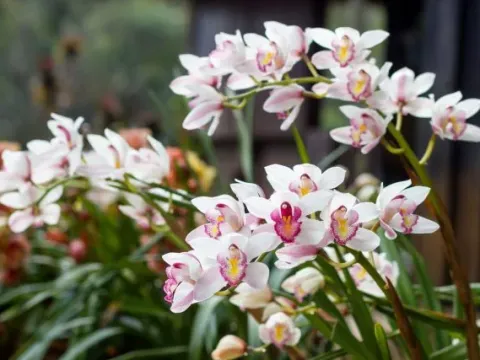
Cymbidium is a genus of evergreen perennial plants in the Orchidaceae family, native to tropical and subtropical Asia and Northern Australia. These orchids are widely cultivated globally for their long-lasting, attractive inflorescences.
What the section contains
 Cymbidium acuminatum
Cymbidium acuminatum
Cymbidium acuminatum
 Cymbidium aliciae
Cymbidium aliciae
Cymbidium aliciae
 Cymbidium aloifolium
Cymbidium aloifolium
Cymbidium aloifolium
 Cymbidium banaense
Cymbidium banaense
Cymbidium banaense
 Cymbidium bicolor
Cymbidium bicolor
Cymbidium bicolor
 Cymbidium borneense
Cymbidium borneense
Cymbidium borneense
 Cymbidium concinnum
Cymbidium concinnum
Cymbidium concinnum
 Cymbidium cyperifolium
Cymbidium cyperifolium
Cymbidium cyperifolium
 Cymbidium dayanum
Cymbidium dayanum
Cymbidium dayanum
 Cymbidium devonianum
Cymbidium devonianum
Cymbidium devonianum
 Cymbidium elegans
Cymbidium elegans
Cymbidium elegans
 Cymbidium ensifolium
Cymbidium ensifolium
Cymbidium ensifolium
 Cymbidium erythraeum
Cymbidium erythraeum
Cymbidium erythraeum
 Cymbidium finlaysonianum
Cymbidium finlaysonianum
Cymbidium finlaysonianum
 Cymbidium floribundum
Cymbidium floribundum
Cymbidium floribundum
 Cymbidium hookerianum
Cymbidium hookerianum
Cymbidium hookerianum
 Cymbidium hybrids
Cymbidium hybrids
Cymbidium hybrids
 Cymbidium insigne
Cymbidium insigne
Cymbidium insigne
 Cymbidium iridioides
Cymbidium iridioides
Cymbidium iridioides
 Cymbidium lancifolium
Cymbidium lancifolium
Cymbidium lancifolium
 Cymbidium macrorhizon
Cymbidium macrorhizon
Cymbidium macrorhizon
 Cymbidium mannii
Cymbidium mannii
Cymbidium mannii
 Cymbidium parishii
Cymbidium parishii
Cymbidium parishii
 Cymbidium sinense
Cymbidium sinense
Cymbidium sinense
 Cymbidium tigrinum
Cymbidium tigrinum
Cymbidium tigrinum
 Ivory Cymbidium
Cymbidium eburneum
Ivory Cymbidium
Cymbidium eburneum
 Low's Cymbidium
Cymbidium lowianum
Low's Cymbidium
Cymbidium lowianum
 Summer Cymbidium
Cymbidium aestivum
Summer Cymbidium
Cymbidium aestivum
Cymbidium
The agricultural success of Cymbidium depends on a strict temperature regime. A significant diurnal temperature fluctuation is essential for floral initiation, especially in cool-growing commercial hybrids.
The substrate must be highly porous and well-draining to prevent root rot. Standard mixes typically consist of pine bark, perlite, and charcoal, which provide the necessary aeration for orchid roots.
Optimal light levels are crucial for photosynthesis and spike production. While these plants enjoy bright, filtered light, they must be shaded during peak sun hours to prevent leaf scorching.
Watering practices should balance moisture retention with rapid drainage. Maintaining relative humidity between 60% and 80% is critical to ensure robust growth and healthy leaf development.
The yield of Cymbidium plants is measured by the number and quality of flower spikes produced annually. A healthy, mature plant can produce multiple spikes, depending on the vigor of the specific hybrid.
Nutrition management involves balanced fertilization programs tailored to the growth phase. High nitrogen fertilizers are used during the vegetative stage, followed by high phosphorus formulas before spiking.
Average production is influenced by light intensity and spacing within the greenhouse. Dense planting can improve land usage but may decrease the number of flowers per spike due to light competition.
Genetic potential defines the number of florets per spike, which typically ranges from 10 to 30. Breeders focus on selecting clones that offer stable production and desirable floral characteristics.
Modern greenhouse technology, including automated climate control, significantly increases the output of high-quality cut flowers, ensuring consistent year-round supply.
Common pests such as spider mites, aphids, and scale insects thrive in dry, stagnant air conditions. Integrated pest management strategies are necessary to maintain crop hygiene.
Root and crown rot pathogens, including Pythium and Phytophthora, are the primary causes of crop failure. These fungi are exacerbated by overwatering and poor-quality, compacting substrates.
Viral pathogens like the Cymbidium Mosaic Virus pose a severe threat because they spread easily through contaminated tools during harvesting or division.
Thrips are a major concern for flower quality, as they feed on developing buds, causing disfigurement and reducing marketability of the final product.
Prevention relies on strict sterilization of equipment, regular monitoring of the crop, and maintaining appropriate environmental conditions to minimize stress on the plants.
Harvesting is performed when the flower spike reaches the desired stage of maturity, typically when about 70-80% of the florets have fully opened for the best vase life.
Clean, sharp tools are used to cut the stems, taking care not to wound the mother plant. Sanitation is paramount to prevent the spread of diseases between individual plants.
Post-harvest care involves moving spikes immediately into water or hydration solutions. This helps maintain turgor pressure and prevents wilting before the flowers reach the market.
Grading standards are applied based on stem length, the number of buds, and overall spike symmetry, which dictate the market price of the cut flower.
Cold chain management is essential during transport to protect the flowers from temperature fluctuations, which can cause premature bud drop or senescence.