
Dactylorhiza aristata
Dactylorhiza aristata
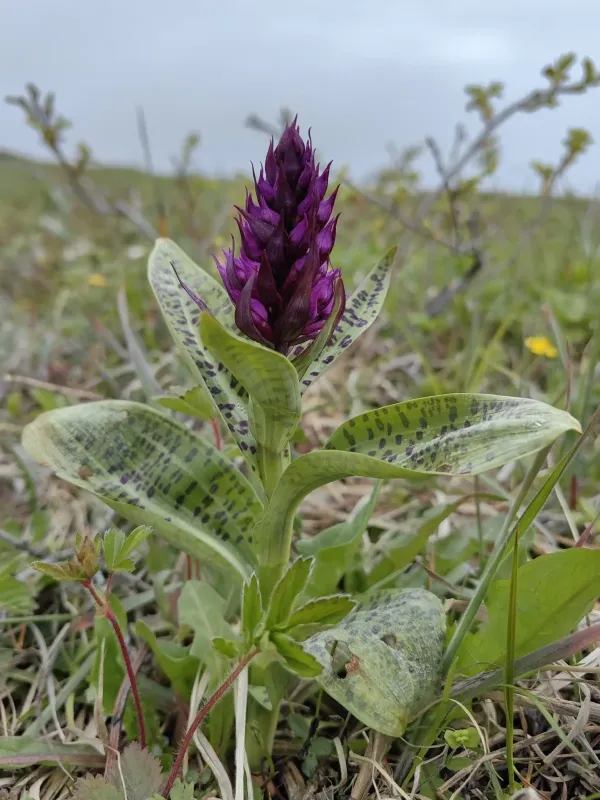
Description
Growing requirements
Dactylorhiza aristata is a perennial herbaceous plant belonging to the Orchidaceae family. It is distinguished by its unique palmate-lobed tubers that store essential nutrients, allowing the plant to survive in diverse environmental conditions.
The native range of this species encompasses the coastal regions of the North Pacific, including the Russian Far East, Japan, and Alaska. It thrives in moist meadows, along riverbanks, and in sparse coniferous forests where filtered sunlight is available.
The plant requires specific soil conditions, favoring loamy or peaty substrates with a neutral to slightly acidic pH. Consistent soil moisture is vital for its development; however, the species cannot tolerate prolonged waterlogging or poor drainage.
In terms of climate, it exhibits remarkable cold hardiness, adapting well to the northern latitudes. The growing season typically coincides with the warming of the soil, leading to a vibrant flowering period during the summer months.
It is important to clarify that this plant is not an agricultural crop. Because it relies on a delicate symbiotic relationship with mycorrhizal fungi for seed germination, cultivating it outside of its natural habitat is an extremely challenging and rare practice.
Main diseases and pests
The primary threats to this orchid include habitat degradation caused by land drainage and changes in local hydrology. When natural wetlands are altered, the species quickly loses its ability to survive and reproduce effectively.
Fungal pathogens represent a significant risk, especially when soil ventilation is inadequate. Excessive moisture often triggers root and tuber rot, which can cause severe losses within localized plant colonies.
Pests, such as various insect larvae, can damage the developing floral stalks, severely impacting the production of seeds. This vulnerability is particularly dangerous for small, isolated groups of plants with limited genetic diversity.
Human activities, including land development and trampling in recreational areas, directly threaten the existence of these orchids. Mechanical damage to the root system is often fatal for the plant, as it has limited regenerative capacity.
Conservation status is paramount for Dactylorhiza aristata. Protecting its habitat from pollution and maintaining traditional land use practices are essential strategies to ensure the long-term survival of this species in its natural range.