
Cymbidium dayanum
Cymbidium dayanum
Description
Growing requirements
Cymbidium dayanum is a striking epiphytic orchid belonging to the Orchidaceae family. Native to the tropical forests of Southeast Asia, including India, Vietnam, and the Philippines, this species typically grows on tree trunks or cliff crevices.
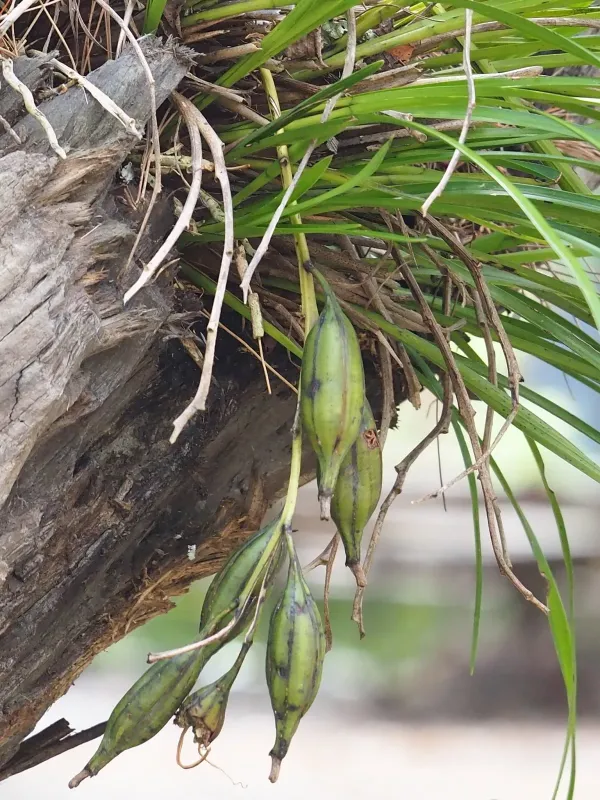
The plant features compact pseudobulbs with long, narrow, leathery, dark green leaves. A defining botanical characteristic of this species is its pendulous, arching inflorescences that can reach up to 50 cm, displaying numerous elegant cream-colored flowers with a prominent central purple stripe.
For successful cultivation, the plant requires bright, diffused light. Direct sunlight should be avoided as it can scorch the foliage. The ideal summer temperature range is +20°C to +25°C, while a cooler winter period with temperatures around +14°C to +16°C is essential to trigger blooming.
The growing medium must be highly porous and moisture-retentive. A mix of pine bark, charcoal, sphagnum moss, and perlite is recommended to provide adequate aeration and prevent water stagnation, which is critical for root health.
Maintaining a humidity level between 60% and 70% is vital for the plant's development. Consistent watering during the active growth phase should be balanced with drying cycles to ensure the roots receive enough oxygen and to mimic the natural tropical environment.
Main diseases and pests
The most common pests affecting Cymbidium dayanum include spider mites and scale insects, which often thrive in environments with low humidity and poor air circulation.
Improper watering practices frequently lead to fungal diseases such as root rot or crown rot, which can be devastating to the plant if not detected in the early stages of infection.
Preventive measures include regular inspection of the leaf undersides and axils, where pests tend to hide. Gentle cleaning or the use of specific insecticides can help manage potential infestations effectively.
Ensuring constant air movement around the plant is crucial to prevent the development of mold and bacterial pathogens. Ventilation helps keep the foliage dry after misting or watering sessions.
Maintenance should include periodic repotting every two to three years to replace degraded substrate, which helps prevent salt accumulation and maintains an optimal pH balance for the root system.