
Low's Cymbidium
Cymbidium lowianum
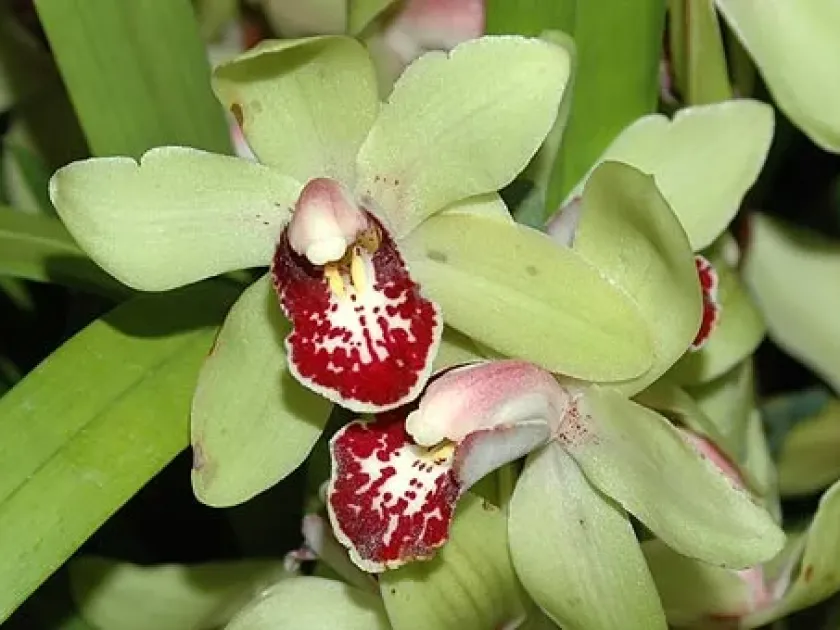
Description
Growing requirements
Cymbidium lowianum, commonly known as Low's Cymbidium, is a spectacular member of the Orchidaceae family. Native to the mountainous regions of Myanmar, Thailand, and Vietnam, this orchid is highly prized for its long, arching inflorescences that carry numerous showy, fragrant flowers.
The plant grows as an epiphyte or lithophyte, possessing large pseudobulbs that serve as storage organs for water and nutrients. These pseudobulbs allow the plant to survive in its native environment where seasonal droughts may occur. The foliage is strap-shaped and persistent, requiring consistent care to maintain health.
Cultivation requires bright, indirect light to encourage healthy growth and flower production. In a greenhouse setting, adequate shading must be provided to prevent leaf scorch. Proper air circulation is just as important as light to prevent stagnant air pockets and moisture buildup.
Temperature management is the most critical aspect of the growing process. For Cymbidium lowianum, a significant diurnal temperature variation is essential for floral induction. Night temperatures should drop to approximately 12–15°C to signal the plant to initiate spike development.
The potting medium must be coarse and well-draining, typically consisting of conifer bark, perlite, and charcoal. Watering should be abundant during the growing season while ensuring the roots are never left in standing water. A reduced watering frequency is observed during the winter resting period.
Main diseases and pests
Common pests affecting Low's Cymbidium include scale insects, mealybugs, and spider mites. These pests thrive in indoor conditions, particularly where humidity levels are not properly regulated, leading to sap loss and general plant decline.
Fungal infections, often manifested as root or crown rot, are typically associated with poor cultural practices. Overwatering, combined with a degraded or overly compact substrate, prevents roots from breathing, creating a breeding ground for Phytophthora and Pythium species.
Leaf spot diseases, caused by various pathogens, can occur if there is excessive overhead moisture combined with poor ventilation. Infected tissue should be pruned away using sterilized tools to prevent the spread of the disease to healthy parts of the orchid.
Virus management is a serious concern for orchid growers. Plants showing symptoms like yellow mosaics or necrotic streaking should be immediately isolated or destroyed to protect the rest of the collection from contamination during maintenance.
Effective management involves a regular scouting program to detect pests early. Using biological controls or targeted, orchid-safe pesticides ensures the health of the crop while maintaining the environmental integrity of the growing space.