
Cymbidium sinense
Cymbidium sinense
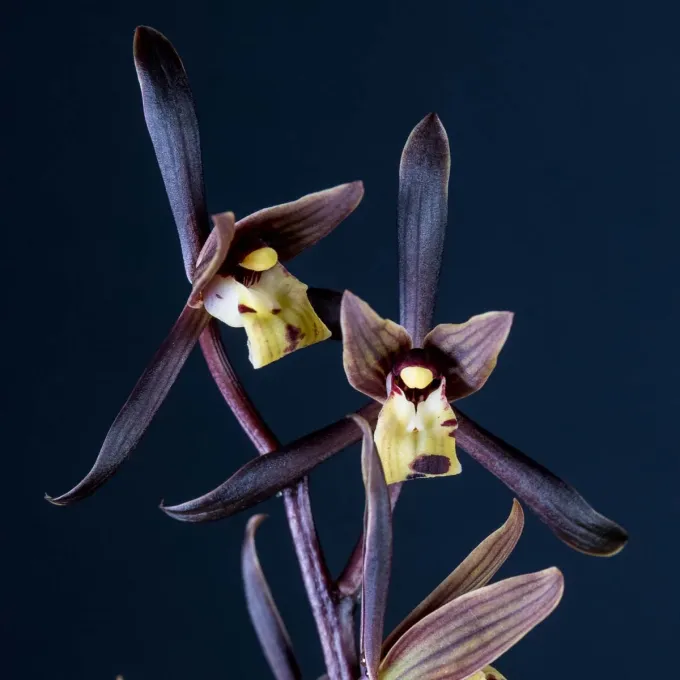
Description
Growing requirements
Cymbidium sinense is a perennial orchid species belonging to the Orchidaceae family. Native to southern China and surrounding regions, it has been cultivated for centuries and is highly valued for its fragrant flowers.
The plant thrives in cool to intermediate climates. It requires a significant diurnal temperature variation, with night temperatures dropping to 10°C–12°C during the autumn months to initiate flower spike development.
Light intensity is critical for the healthy growth of this culture. It prefers filtered, bright light. Direct sunlight, especially during midday, must be avoided to prevent thermal stress and leaf burn.
For substrate requirements, a well-draining mixture is essential. Commercial growers typically utilize bark-based mixes, perlite, and charcoal to maintain an acidic environment (pH 5.5–6.0) and prevent root rot.
High humidity levels of 60% to 75% are necessary for optimal development. Growers must ensure consistent air movement to prevent the build-up of moisture on leaves, which could otherwise invite fungal pathogens.
Main diseases and pests
Scale insects are common pests for this species, often clustering on the pseudobulbs. Integrated pest management, including systemic insecticides, is required for effective control in professional settings.
Aphids tend to target the tender flower buds, causing deformation. Regular scouting and immediate application of appropriate agents are necessary to protect the quality of the cut flowers.
Bacterial soft rot can occur if water remains trapped in the center of the new growths. Strict adherence to irrigation schedules, where water is kept away from the foliage, is a primary control measure.
Fungal diseases like Botrytis can appear on petals during humid, stagnant conditions. Improving airflow and lowering ambient humidity during the blooming stage are crucial preventative steps.
Root system decline is often the result of substrate degradation. Timely repotting every two years using fresh, high-quality organic media is standard practice for long-term health of the plant.