
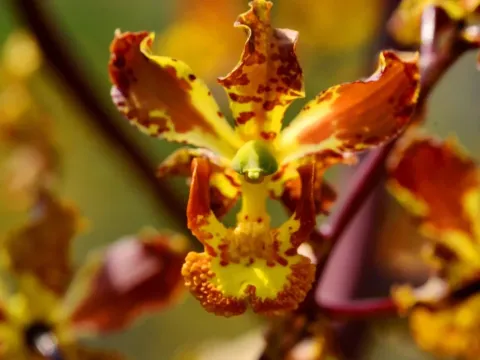
Cyrtopodium
Cyrtopodium
Cyrtopodium is a genus of large-sized orchids within the Orchidaceae family, known for their impressive pseudobulbs that can reach significant heights. These plants function primarily as epiphytes or lithophytes, displaying a robust growth habit that distinguishes them from smaller orchid genera.
What the section contains
 Cyrtopodium andersonii
Cyrtopodium andersonii
Cyrtopodium andersonii
 Cyrtopodium cipoense
Cyrtopodium cipoense
Cyrtopodium cipoense
 Cyrtopodium eugenii
Cyrtopodium eugenii
Cyrtopodium eugenii
 Cyrtopodium flavum
Cyrtopodium flavum
Cyrtopodium flavum
 Cyrtopodium gigas
Cyrtopodium gigas
Cyrtopodium gigas
 Cyrtopodium parviflorum
Cyrtopodium parviflorum
Cyrtopodium parviflorum
 Cyrtopodium punctatum
Cyrtopodium punctatum
Cyrtopodium punctatum
 Cyrtopodium saintlegerianum
Cyrtopodium willmorei
Cyrtopodium willmorei
Cyrtopodium saintlegerianum
Cyrtopodium saintlegerianum
Cyrtopodium willmorei
Cyrtopodium willmorei
 Cyrtopodium woodfordii
Cyrtopodium woodfordii
Cyrtopodium woodfordii
Cyrtopodium
Native to the tropical and subtropical regions of the Americas, ranging from Florida down to Argentina, these orchids thrive in environments with distinct wet and dry cycles. Their adaptation to seasonal changes is a critical factor for successful greenhouse or home cultivation.
Requirements for cultivation include high light intensity, which is essential for triggering the blooming process. In indoor conditions, supplementary lighting is often necessary to replicate the bright sun they receive in their native habitats during the peak growing season.
The potting medium must be highly porous to ensure rapid drainage. A mixture containing coarse pine bark, charcoal, and inorganic additives like perlite or expanded clay is recommended to provide stability while preventing the root system from becoming waterlogged.
A rigorous irrigation strategy is vital: during the growth phase, the substrate should be kept consistently moist with regular fertilization. Once the pseudobulbs are fully matured, the plant must enter a resting phase with significantly reduced watering to induce dormancy.
Spider mites represent a major threat to Cyrtopodium, especially in environments where humidity levels are not consistently maintained. Periodic washing of the leaves and the use of specialized miticides are effective ways to manage potential infestations.
Bacterial soft rot and fungal infections pose significant risks if the plant is subjected to poor air circulation or excess moisture trapped within leaf axils. Ensuring proper ventilation and using sterilized tools for any maintenance work are essential preventive practices.