
Cymbidium hookerianum
Cymbidium hookerianum
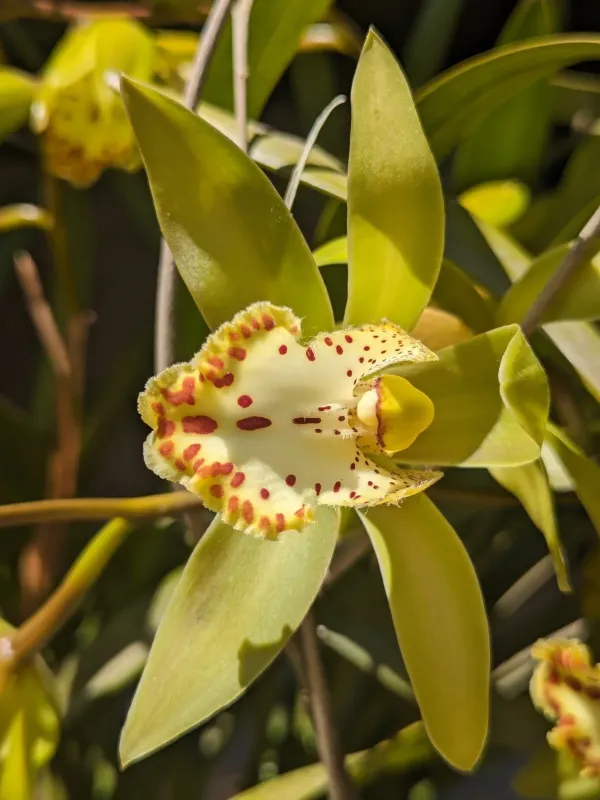
Description
Growing requirements
Cymbidium hookerianum is a notable species within the Orchidaceae family, originating from the Himalayan regions including Nepal, India, and China. This orchid species is prized in floriculture for its large, distinctive flowers and robust growth habit as an epiphyte or lithophyte in its natural habitat.
The botanical structure of the plant features large, elongated pseudobulbs that support long, arching leaves. These structures are vital for nutrient storage, allowing the orchid to thrive in mountainous environments characterized by varying moisture levels and seasonal temperature fluctuations.
Climate requirements for successful production center on a cool-growing regime. Daytime temperatures are ideally maintained between 18°C and 22°C, while significant temperature drops at night are essential to induce blooming and strengthen the overall vigor of the plant during the vegetative phase.
For soil and potting requirements, a well-draining, airy substrate is mandatory. Growers typically utilize a mix consisting of bark chunks, charcoal, and horticultural perlite to ensure rapid water drainage while retaining sufficient moisture for the root system to remain hydrated without becoming waterlogged.
Cultural management requires consistent atmospheric humidity, ideally ranging between 60% and 75%. Adequate airflow is equally critical to prevent the accumulation of moisture on foliage, which can lead to rapid onset of physiological issues or pathogen proliferation in intensive greenhouse settings.
Main diseases and pests
Common pests associated with this species include spider mites, which flourish in dry, poorly ventilated conditions. Effective management involves maintaining optimal humidity levels and applying biological controls or targeted miticides when pest threshold levels are exceeded.
Fungal rot of the roots and pseudobulbs poses a major threat if the irrigation system is poorly calibrated. To mitigate these risks, growers must prioritize the use of high-quality irrigation water and implement periodic sanitation protocols for both benches and growing containers.