
Cymbidium floribundum
Cymbidium floribundum
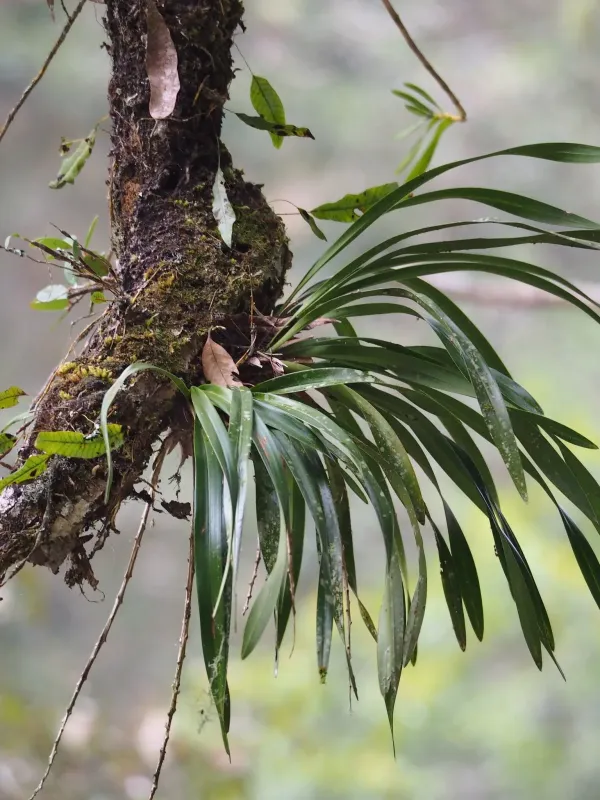
Description
Growing requirements
Cymbidium floribundum is an orchid species belonging to the Orchidaceae family, native to the mountainous regions of China and Vietnam. It is highly regarded by collectors for its long, pendant racemes that bear a multitude of small, fragrant, and deeply colored flowers.
The plant grows from compact pseudobulbs, producing narrow, arching leaves that give it a grass-like appearance. In its native habitat, it functions as an epiphyte or lithophyte, clinging to rocks or trees where drainage is naturally excellent, which defines its requirements in domestic cultivation.
Climate requirements for this species are specific, as it thrives in cool temperatures. Daytime temperatures should be kept around +20...+25°C, while nighttime temperatures in autumn and winter should ideally drop significantly, down to +10...+15°C, to trigger the development of flower spikes.
The substrate must be porous and coarse to prevent root suffocation. A blend of pine bark, charcoal, and perlite provides the necessary structure to support the plant while allowing water to drain quickly, preventing the dangerous waterlogging that causes root decay.
Bright, indirect light is essential for the healthy growth of Cymbidium floribundum. During the peak growing season, the plant benefits from high humidity levels and consistent airflow, which mimic the misty forest environments where it originates, ensuring vigorous pseudobulb development.
Main diseases and pests
The most common pests affecting this orchid are scale insects, which hide under the leaf sheaths and pseudobulb scales. Regular physical inspection and wiping with mild soap solutions or targeted application of insecticides are recommended to maintain plant health.
Root rot is the primary physiological threat, usually caused by overwatering or the use of decomposed potting media that retains too much moisture. To avoid this, it is crucial to allow the substrate to approach dryness before providing the next watering cycle, especially during the dormant phase.