
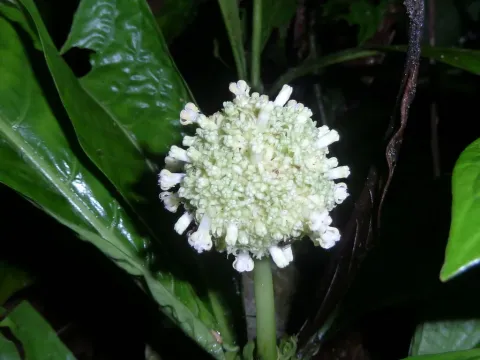
Psychotria
Psychotria
Psychotria is a large genus of flowering plants within the Rubiaceae family, primarily consisting of evergreen shrubs and small trees. These plants are native to tropical and subtropical regions across the globe, predominantly found in the understory of dense rainforests.
What the section contains
 Psychotria alba
Psychotria annulata
Psychotria annulata
Psychotria alba
Psychotria alba
Psychotria annulata
Psychotria annulata
 Psychotria asiatica
Psychotria asiatica
Psychotria asiatica
 Psychotria barbiflora
Psychotria barbiflora
Psychotria barbiflora
 Psychotria berteroana
Psychotria berteroana
Psychotria berteroana
 Psychotria calva
Psychotria calva
Psychotria calva
 Psychotria capensis
Psychotria capensis
Psychotria capensis
 Psychotria dubia
Psychotria dubia
Psychotria dubia
 Psychotria eminiana
Psychotria fertitensis
Psychotria fertitensis
Psychotria eminiana
Psychotria eminiana
Psychotria fertitensis
Psychotria fertitensis
 Psychotria gardneri
Psychotria glandulifera
Psychotria glandulifera
Psychotria gardneri
Psychotria gardneri
Psychotria glandulifera
Psychotria glandulifera
 Psychotria helferiana
Psychotria jackii
Psychotria jackii
Psychotria josephi
Psychotria josephi
Psychotria lasiophthalma
Psychotria lasiophthalma
Psychotria helferiana
Psychotria helferiana
Psychotria jackii
Psychotria jackii
Psychotria josephi
Psychotria josephi
Psychotria lasiophthalma
Psychotria lasiophthalma
 Psychotria ligustrifolia
Psychotria longipetiolata
Psychotria longipetiolata
Psychotria ligustrifolia
Psychotria ligustrifolia
Psychotria longipetiolata
Psychotria longipetiolata
 Psychotria luzoniensis
Psychotria luzoniensis
Psychotria luzoniensis
 Psychotria mahonii
Psychotria mahonii
Psychotria mahonii
 Psychotria malayana
Psychotria malayana
Psychotria malayana
 Psychotria nervosa
Psychotria nervosa
Psychotria nervosa
 Psychotria nigra
Psychotria nigra
Psychotria nigra
 Psychotria ovoidea
Psychotria penangensis
Psychotria penangensis
Psychotria ovoidea
Psychotria ovoidea
Psychotria penangensis
Psychotria penangensis
 Psychotria plurivenia
Psychotria plurivenia
Psychotria plurivenia
 Psychotria polycarpa
Psychotria polycarpa
Psychotria polycarpa
 Psychotria psychotrioides
Psychotria psychotrioides
Psychotria psychotrioides
 Psychotria pubescens
Psychotria rostrata
Psychotria rostrata
Psychotria pubescens
Psychotria pubescens
Psychotria rostrata
Psychotria rostrata
 Psychotria ruelliaefolia
Psychotria ruelliaefolia
Psychotria ruelliaefolia
 Psychotria sarmentosa
Psychotria schweinfurthii
Psychotria schweinfurthii
Psychotria sarmentosa
Psychotria sarmentosa
Psychotria schweinfurthii
Psychotria schweinfurthii
 Psychotria serpens
Psychotria sordida
Psychotria sordida
Psychotria tabacifolia
Psychotria tabacifolia
Psychotria serpens
Psychotria serpens
Psychotria sordida
Psychotria sordida
Psychotria tabacifolia
Psychotria tabacifolia
 Psychotria vellosiana
Psychotria vellosiana
Psychotria vellosiana
 Psychotria viridis
Psychotria vogeliana
Psychotria vogeliana
Psychotria viridis
Psychotria viridis
Psychotria vogeliana
Psychotria vogeliana
 Psychotria zeylanica
Psychotria zeylanica
Psychotria zeylanica
 Psychotria zombamontana
Psychotria zombamontana
Psychotria zombamontana
Psychotria
Cultivating Psychotria requires mimicking its natural environment, which means maintaining high ambient humidity, ideally above 70%. These plants thrive in conditions where the temperature remains stable between 22°C and 28°C, as sudden thermal fluctuations can cause significant physiological stress.
The soil requirements are specific: the plant needs a well-draining, nutrient-rich substrate with an acidic to neutral pH. A mix containing peat, perlite, and organic compost is recommended to ensure both moisture retention and adequate aeration for the root system.
Light exposure for Psychotria must be carefully managed. As an understory plant, it prefers filtered or indirect light. Exposure to intense, direct sunlight often results in leaf scorch, yellowing, and eventual plant decline, so placement in shaded areas is critical for long-term health.
Irrigation management is a cornerstone of Psychotria cultivation. The soil should be kept consistently moist but never waterlogged. Overwatering is the most common cause of root rot, so ensuring that the planting medium drains freely is essential for successful growth.
Psychotria is frequently attacked by sap-sucking pests such as spider mites, mealybugs, and scale insects. These pests are particularly problematic in greenhouse environments with poor airflow and low humidity, which often trigger rapid population explosions.
Fungal pathogens, especially those causing root rot and damping-off, represent a severe threat. These conditions usually stem from overwatering, poor drainage, or the use of non-sterile soil mixes, which allow pathogens like Phytophthora or Pythium to colonize the root zone.
Management of these threats involves a combination of cultural practices and chemical control. Regular scouting for pests is necessary, as is the immediate removal of infested leaves to prevent the spread of the colony throughout the collection.
Preventive measures include improving ventilation within the growing space to lower humidity levels around the foliage, while keeping the root zone humidity controlled. Regular sanitation of tools and pots is also vital to prevent the transmission of diseases between individual plants.
Chemical treatments should be used judiciously, prioritizing systemic insecticides for persistent pest infestations and targeted fungicides for root health. Always test any spray on a small portion of the plant to check for phytotoxicity before applying it to the entire specimen.